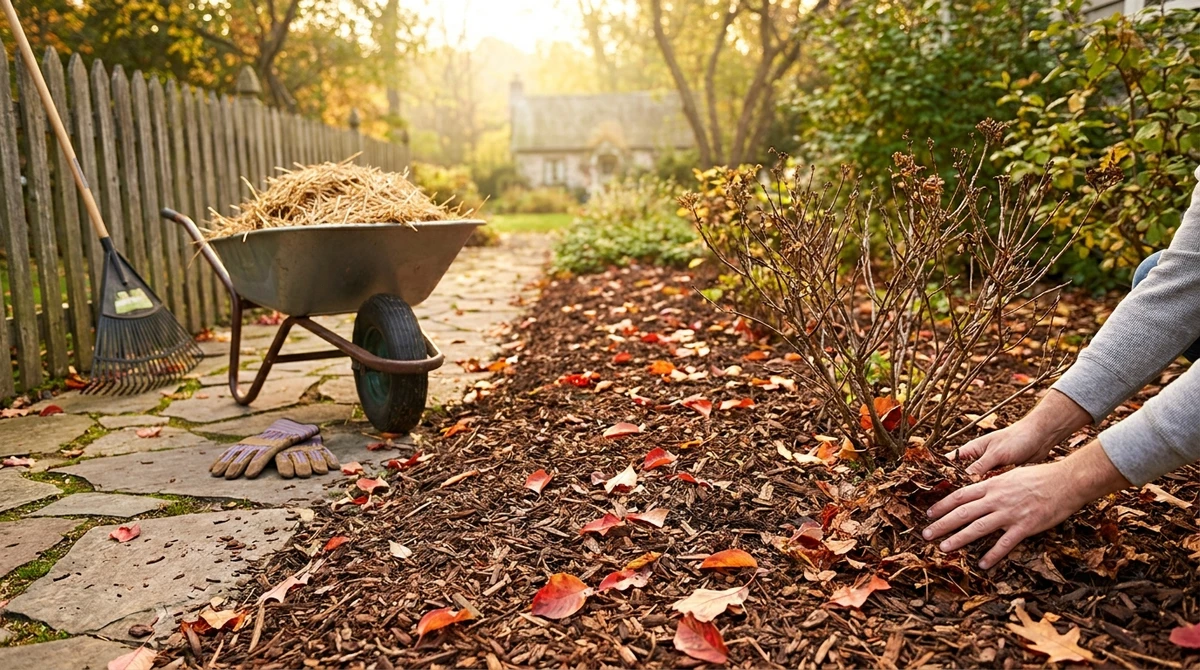
The Importance of Mulching in Autumn
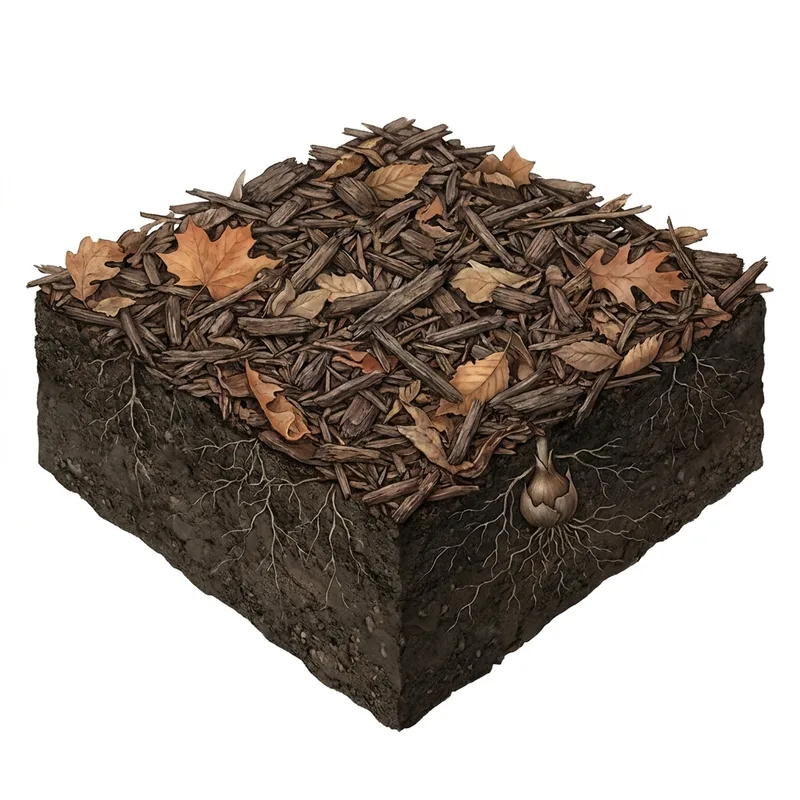
For mulching garden beds in autumn, apply a 2 to 3 inch layer of organic mulch such as shredded leaves, compost, or bark. This depth conserves soil moisture, suppresses weeds, and insulates plant roots against freezing winter temperatures without smothering them.
I have learned, over thirty-plus autumns, that the timing matters as much as the material. Wait until the ground has cooled, somewhere around mid-November in my Zone 5b garden, and you avoid inviting rodents to nest against warm crowns. Pile it on too early and you trap heat. Too late and the freeze-thaw cycles have already heaved your newly planted garlic and shallow-rooted asters halfway out of the ground. A proper fall garden cleanup checklist accounts for this sequence.
The Royal Horticultural Society confirms what my own beds have shown me season after season: a 2 to 3 inch layer of organic mulch conserves soil moisture and suppresses weeds without smothering plant roots (Royal Horticultural Society). That depth is the sweet spot. Less, and you lose the insulating blanket effect. More, and you risk rot, particularly on perennials and woody stems.
Winter temperature protection is the reason I mulch most intently. The goal is not warmth but stability, holding soil at an even temperature so roots do not break dormancy during a January thaw only to be clobbered by the next cold snap. Shredded oak leaves are my preference for beds. They mat down rather than blowing away.
Choosing the Right Mulch for Your Garden
For mulching garden beds in autumn, apply two to three inches of shredded leaves, compost, or bark to perennial beds after frost but before ground freeze. Use straw or evergreen boughs on tender plants, keeping all mulch away from stems and crowns to prevent rot.
I have spent thirty autumns mulching this hillside garden, and I keep returning to the same materials. Organic mulch is what I use because it feeds the soil as it breaks down. Leaves, compost, bark, straw, each has its place. Inorganic mulch like stone or landscape fabric has its uses, perhaps on a dry path or beneath a foundation planting, but it contributes nothing to soil structure and I avoid it in beds where plants must overwinter.
Shredded oak and maple leaves are my first choice for perennial borders. They mat down nicely, insulating crowns of asters and sedums without smothering them. Compost goes on the vegetable beds, where spent tomatoes and peppers stood last month. Bark mulch I reserve for woody plantings, around the old rhododendrons and the blueberry patch, because it holds through winter without washing away in spring rains.
Some plants ask for special treatment. My tender rosemary gets a collar of straw, and the fig tree gets wrapped in burlap stuffed with autumn leaves. Garlic beds get a blanket of straw to prevent heaving through the freeze-thaw cycle. Before you mulch anything, though, work through a fall garden cleanup checklist so you are not trapping diseased foliage or harboring pests beneath that cozy layer.
Ideal Mulch Depth for Effective Coverage
Mulching garden beds in autumn: how much and which mulch? Apply a 2 to 3 inch layer of organic mulch, shredded leaves, compost, or bark, over beds after cleanup, keeping it back from stems and crowns. That depth conserves moisture, suppresses weeds, and insulates roots through winter.
I learned the hard way one November that more is not better. I’d piled a foot of shredded oak leaves over a patch of newly planted hellebores, thinking I was tucking them in for winter. Come March, three crowns had rotted clean through. A 2 to 3 inch layer of organic mulch conserves soil moisture and suppresses weeds without smothering plant roots, as the Royal Horticultural Society advises, and that is the range I return to every fall now, no matter how generous I feel.
The depth matters because of what mulch actually does underground. Two inches still lets early-spring sun warm the soil so my garlic can get going. Three inches holds enough moisture to carry the bed through dry October winds. Anything thicker turns into a wet mat that locks in cold and invites the very rot I brought on those hellebores. Less than two, and the weed seeds I missed during my fall garden cleanup checklist simply laugh and germinate anyway.
Preparing Your Garden Beds for Mulching
Before a single wheelbarrow of mulch touches the soil, the beds need a thorough clearing. Fallen leaves, twiggy debris, and the last of the frost-killed annuals pulled and composted, anything diseased set aside for the trash rather than the heap. A fall garden cleanup checklist keeps me honest about what stays and goes. I work on my knees, feeling for crowns of emerging epimedium and hellebore, careful not to trample them.
This is also the moment for soil amendment. A thin layer of compost, perhaps an inch, scratched in around perennials feeds the soil food web through the cold months. I avoid heavy digging now. Autumn is for laying down, not turning up.
Then, water. Even in late October, I run the hose over beds that have gone dry beneath their leaf litter. Mulch laid over parched soil locks in drought. Laid over moist soil, it conserves what’s there. I soak the beds until the water penetrates an inch or two, then let the surface dry before spreading mulch. Damp, never sodden.
Applying Mulch: Techniques and Tips
I learned the hard way, years ago, that mulching is not a dumping exercise. You cannot simply pitch a wheelbarrow load onto the bed and hope the rake will sort it out. Even distribution starts with smaller, deliberate handfuls, or with the fork held low, scattering in a wide arc as you step backward off the bed. Work from the edges inward. This keeps the material moving toward the center, where depth matters most for root protection, rather than piling it at the perimeter where it will simply slide into the lawn.
The single most common mistake I see, and I have made it myself with overzealous enthusiasm in October, is banking mulch against the trunks of shrubs and the crowns of perennials. Bark mulch or shredded leaves piled against woody stems trap moisture, inviting rot and giving voles hidden runways to gnaw at bark all winter. Keep mulch pulled back a few inches from any woody stem, and leave the crowns of tender perennials, like my Asarum europaeum, barely covered or simply blanketed lightly so they can breathe. A finished bed should look like a freshly made doughnut, not a volcano.
Once laid, autumn mulch largely tends itself through the frozen months, but I always walk the beds after the first hard thaws of late winter. Wind can shift lightweight straw. Heavy rain can compact fluffy leaf litter into a mat that suffocates emerging shoots. A quick fluff with a fork or a top-up in bare spots keeps the layer working as insulation and weed suppression. Tying this work into your broader fall garden cleanup checklist ensures you do not forget the beds that need attention most before the ground freezes solid.
Monitoring and Maintaining Your Mulch
I check my mulch the way I check the pantry, by looking, touching, and trusting what I find rather than following a rigid schedule. A good autumn mulch layer should still be holding its shape come February, but by March I’m out there kneeling in the cold, pressing back the shredded leaves and pine bark to see what remains. When the layer has thinned to under an inch, when I can see bare soil peeking through, or the mulch has gone gray and crumbly and lost its loft, I know it’s time to top things up. Woody mulches like bark nuggets break down slowly, holding their structure through two full seasons. Leaf mold and compost go faster, often needing a refresh by early spring.
Seasonal timing matters more than most gardeners realize. I never replenish mulch while the ground is still warm and actively biodegrading in late autumn, because piling fresh material on top of a working soil ecosystem can smother it. Instead, I wait for the soil to cool and settle into its winter dormancy, then add just enough to maintain that two-to-three-inch depth I aimed for back in October. A light fluff with a fork, not a full turn, revives compacted mulch that’s matted from winter rain and snow, restoring its insulating air pockets. And if you’re working through your fall garden cleanup checklist and notice the mulch has washed into piles against trunks or crowns, pull it back gently. That contact invites rot and gives rodents a winter hiding spot.
Takeaways: The Key to Successful Autumn Mulching
Mulching garden beds in autumn comes down to two decisions: which material and how deep. For most ornamental beds, two to three inches of shredded bark or leaf mold does the work. Vegetable plots benefit more from straw or compost at the same depth. I keep wood chips for paths, not beds. Before you lay anything down, work through a fall garden cleanup checklist so you’re not trapping diseased leaves or slug eggs under a cozy winter blanket.
The depth question matters more than gardeners realize. Too little and frost heave will lift your crowns. Too much and you’ve built a damp mat that invites rot. I aim for that two-to-three-inch window and pull every mulch back from stems, trunks, and crowns. No volcanoes around the base of anything.
What you get in return is worth the effort. A proper autumn mulch moderates soil temperature swings, holds moisture through dry winter winds, and feeds the soil biology that keeps the whole system running. Come spring, the beds wake up in better shape than they went to sleep.
Frequently Asked Questions
How much mulch should I apply to garden beds in autumn?
I aim for a two- to three-inch layer on most beds, enough to insulate roots and suppress winter weeds without smothering the soil beneath. On perennial borders, I lean toward the lighter end. Heavy clay soils get less. Sandy plots can take a bit more. For a thorough prep routine, see the fall garden cleanup checklist.
Which types of mulch are best for autumn mulching: leaves, wood chips, bark, straw, compost, or other materials?
Shredded leaves are my go-to. Free, locally available, and beloved by soil organisms. On ornamental beds, fine bark holds its texture through snow. Compost feeds while it blankets. Straw suits vegetable plots. I avoid raw wood chips on perennial crowns. They mat and shed water.
Should mulch be applied before or after the first frost, and what timing is best for different plants or climates?
Here in Zone 5, I wait until the ground freezes lightly, usually mid-November, before adding winter mulch. The goal is keeping soil frozen, not warming it. Earlier mulching invites rodents and delays dormancy. Gardeners in mild climates can mulch anytime beds are weeded and cleaned.
How far should mulch be kept away from stems, trunks, crowns, and perennials to avoid rot or pests?
I pull mulch back several inches from woody trunks and perennial crowns. What I call the doughnut, not the volcano. Bark piled against a young tree’s trunk invites rot and borers. Crowns of tender perennials like heuchera want a light, airy covering, not a dense pack.
What benefits does autumn mulching provide, and are there any risks or situations where mulching should be avoided?
Autumn mulch moderates freeze-thaw cycles that heave young plants, feeds soil biology, and holds moisture. But skip it where voles are active. They’ll tunnel under cozy cover and gnaw bark. Wet, poorly drained spots need less mulch, not more. Piling on soggy beds only compounds rot.
Sources
- Royal Horticultural Society — Rhs (rhs.org.uk)
Leave a Reply