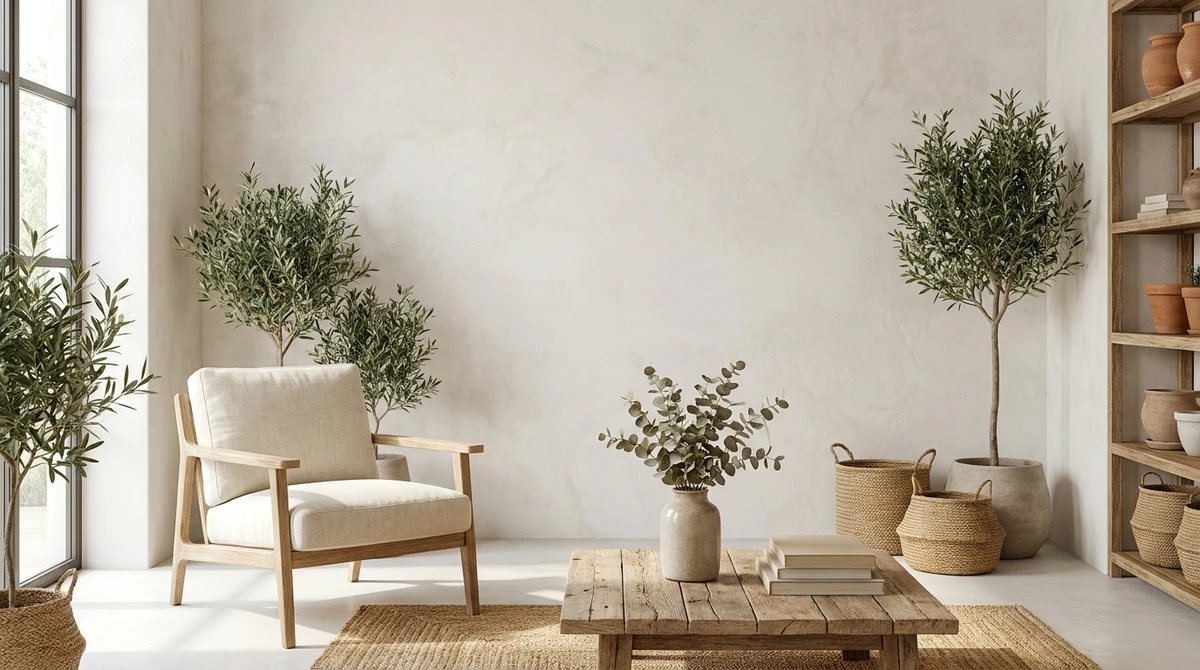
The Importance of Sustainable Decor in Small Spaces
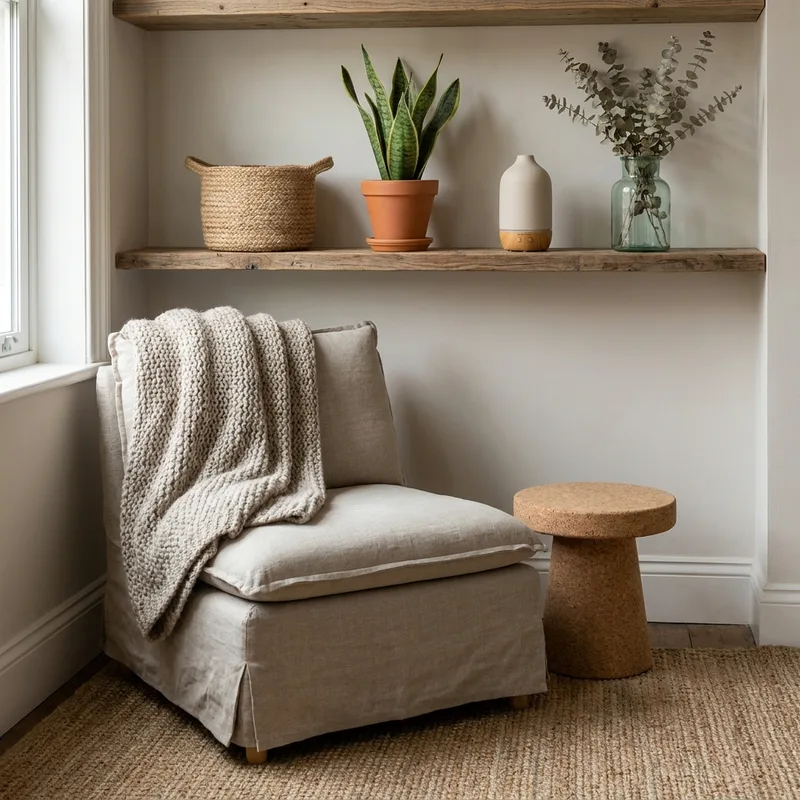
Sustainable natural-material decor for a small living room means choosing furnishings and textiles made from renewable, non-toxic sources—like unvarnished oak, reclaimed teak, organic linen, and handwoven jute—that age gracefully without off-gassing or cluttering space. I’ve lived with these materials for over a decade, and their quiet presence does more than reduce chemical load—it deepens calm. In a compact room, every piece must earn its place, and natural materials do that by breathing with the space, not fighting it. A low-slung bench of reclaimed walnut, its grain still whispering of forest wind, holds more presence than three synthetic ottomans. Linen curtains, washed soft by rain and time, filter afternoon light like a meadow at dusk. I’ve watched how a single jute rug, worn thin in places, becomes more beautiful with use—its fibers holding the memory of bare feet, of quiet mornings. Unlike mass-produced synthetics, these things don’t need replacing; they invite care. And in a small room, where every square inch counts, that durability isn’t just practical—it’s poetic. For more on how to select materials that last, see mulching garden beds in autumn: how much and which mulch, where the same principle applies: less is more, and nature knows best.
Choosing Natural Materials: A Guide
I’ve spent decades choosing materials not just for their look, but for their story—how they were grown, harvested, and shaped by hands that knew when to wait and when to act. In my own small living room, the oak side table came from a fallen tree in a neighbor’s yard, milled locally; its grain still carries the memory of summer storms. Wood, when reclaimed or FSC-certified, doesn’t just hold weight—it holds time. Stone, too, has quiet dignity: a slab of local limestone from a quarry that still uses hand tools, its surface worn smooth by centuries of rain and frost, now rests beneath my favorite chair. It doesn’t need polish; it only asks for patience. Textiles are trickier. Linen from flax grown in Belgium, woven without synthetic dyes, breathes like the leaves of Linum usitatissimum in July. Wool from sheep raised on pasture, not feedlots, retains warmth without synthetic insulation. I’ve learned to touch before I buy: if it feels brittle, it’s been overprocessed. If it smells faintly of earth, it’s likely honest. There’s no certification that replaces the quiet assurance of knowing where something came from—just as there’s no mulch depth that replaces the intuition of a gardener who’s felt the soil beneath their nails. mulching garden beds in autumn: how much and which mulch taught me that less is often more—and so it is with decor. A single piece of honest material, placed with care, does more than a room full of noise.
Maximizing Space with Sustainable Decor
I’ve spent decades rearranging small spaces—not just in gardens, but in city apartments where every inch counts. In my own living room, a reclaimed oak bench from a shuttered Vermont schoolhouse doubles as seating and a side table, its surface worn smooth by decades of hands and rain. It holds my teapot, a basket of dried lavender from last summer, and a stack of dog-eared seed catalogs. That’s the rhythm: function first, then beauty. When I installed vertical shelves made of sustainably harvested bamboo—salvaged from a demolished warehouse in Portland—I didn’t just gain storage; I freed up floor space for the philodendron and the geraniums I keep near the window, their leaves brushing the glass like shy guests. The shelves, untreated and oiled with linseed, breathe with the seasons, darkening slightly in winter’s dim light. I’ve seen too many “sustainable” pieces that are just veneer over particleboard; real durability comes from material honesty. Choose solid wood, jute-woven baskets, or wool rugs certified by the Global Organic Textile Standard. They outlive trends—not because they’re fashionable, but because they’re made to be held, not discarded. And if you’re wondering where to begin? Start with what you already own. A ladder turned bookshelf, a crate turned side table—these are quiet acts of renewal. mulching garden beds in autumn: how much and which mulch taught me that layering matters—same in the home. A 2-inch shelf of woven rattan beneath the sofa? It hides the vacuum and the dog’s chew toy, and still lets the floor breathe.
Incorporating Plants for a Natural Touch
I’ve spent decades watching how a single fiddle-leaf fig, placed just so beside a reclaimed oak side table, can turn a corner into a quiet sanctuary—its leathery leaves catching the afternoon light like stained glass. In a small living room, plants aren’t just decor; they’re the quiet pulse of the space, softening edges, humidifying dry air, and yes—filtering toxins, as NASA’s Clean Air Study first noted with Chlorophytum comosum and Epipremnum aureum. I’ve seen them thrive in terracotta pots on a windowsill, their roots snug but not crowded, their needs simple: bright, indirect light, and a drink only when the top inch of soil feels like a cool stone. For narrow spaces, I favor Sansevieria trifasciata—snake plant—whose upright blades demand little and forgive much, even when I forget to water for weeks. A trailing Scindapsus pictus in a woven jute hanger spills green like a liquid curtain, no shelf required. I don’t buy plastic planters; I repurpose ceramic bowls from my kitchen, or thrifted stoneware, glazed in earth tones. And I mulch the soil surface—not for the garden bed, but for the pot—with a thin, 1-inch layer of shredded coconut coir, just enough to slow evaporation without choking the roots. It’s a habit I learned from my grandmother, who kept a single Hedera helix in her hallway for forty years. She never spoke of air quality. She just said, “It feels alive.” And it did.
Creating a Cohesive Look with Color and Texture
I’ve spent years arranging mossy stones and woven baskets beside my garden shed, learning how texture and tone whisper more than any label ever could. In a small living room, where every inch breathes with intention, I reach for linen that softens with time—like the way Lavandula angustifolia petals fade in late summer—and pair it with undyed wool from a shepherd in the Pyrenees, its slight irregularities holding the memory of wind. The palette? Not trendy gray, but the quiet hum of clay, oat, and the pale green of Fagus sylvatica leaves in early spring—colors that don’t shout but settle in, like mulch around a rootball. Mulching garden beds in autumn: how much and which mulch taught me that too much of anything smothers; a 2-inch layer of jute rug underfoot, a single teak side table, a basket of dried Artemisia ludoviciana—these are the anchors, not the clutter. Texture is the quiet pulse: the grit of raw ceramic beside the silkiness of ramie curtains, the way a handwoven cotton throw catches the afternoon light differently than a synthetic one ever could. I don’t choose finishes to match—I choose them to converse. And when the light slants low in November, it’s not the brand that matters, but the silence between the materials—the space where calm lives.
Real-Life Examples of Sustainable Decor
I still remember the first time I sat in Lena’s living room—the one she carved out of a Brooklyn studio with reclaimed oak shelving, a jute rug woven in Oaxaca, and linen curtains that caught the afternoon light like a gauzy veil. No new furniture. No plastic. Just things that had lived before, and would live again. She told me she bought the armchair from a neighbor who’d inherited it from his grandmother—upholstered in wool that had faded to the color of dried lavender, the frame still solid, the springs singing just enough to remind you it was hand-built. That chair, she said, was her daily meditation.
Her coffee table? A slab of salvaged black walnut, sanded by hand, finished with beeswax—no varnish, no toxins. It holds a ceramic bowl she made in a clay workshop last fall, filled with pinecones from the park, and a single sprig of rosemary she grows in a terracotta pot on the windowsill. It smells like winter, even in June.
I’ve seen too many “sustainable” living rooms that feel like a catalog—perfectly arranged, sterile. Lena’s isn’t. It’s lived-in. The wool blanket on the sofa? Hand-knit by her mother from ethically sourced Merino, dyed with onion skins. The shelves? Built from pallet wood she stripped and planed herself, after learning how to avoid hidden nails.
I keep thinking about how much carbon we save—not by buying “eco” labels, but by choosing to love what’s already here. And how, in a small space, every object must earn its place. Not by trend, but by memory, by craft, by care.
Mulching garden beds in autumn: how much and which mulch taught me patience—layering, not dumping. The same applies here. Slow decor, like slow soil, takes time to settle into its truest form.
Takeaways: Your Path to a Sustainable Living Room
I’ve spent years watching how light falls on a wool rug woven in Nepal, how the grain of reclaimed oak holds the memory of its former life, how a potted Ficus lyrata in a hand-thrown terracotta pot softens the edge of a bamboo shelf. Sustainable decor isn’t about perfection—it’s about patience, and presence. In a small living room, every object carries weight, so choosing materials that breathe—linen, jute, untreated wood, recycled glass—feels less like a choice and more like a relief. I’ve seen too many spaces choked with synthetic fibers that trap heat and off-gas; I’ve sat on sofas that cracked after two winters. But a chair upholstered in organic cotton, its frame sourced from a local mill that mills only sustainably harvested maple? That’s the kind of thing that settles into your bones. You don’t need to overhaul everything at once. Start with one piece—a throw from a cooperative in Oaxaca, a side table made from salvaged driftwood. Let it live with you. Notice how it changes with the seasons, how it gathers dust like pollen on a leaf. When you’re ready, consider how your choices ripple: the water saved by avoiding synthetic dyes, the carbon not released by shipping plastic from halfway around the world. You’re not just decorating. You’re tending. And if you’ve ever mulched a bed with two inches of shredded bark—just enough to hold moisture without smothering roots—you already know this rhythm. mulching garden beds in autumn: how much and which mulch. Start small. Stay curious. Let your space grow with you.
Frequently Asked Questions
How can I decorate a small living room using sustainable, natural materials without making the space feel cluttered?
I’ve learned that less is never too little—especially when the materials have character. A single walnut side table, a handwoven jute rug, and one ceramic vase with dried lavender from my garden speak louder than a dozen mass-produced items. Let each piece breathe. Avoid stacking; instead, anchor with one or two intentional objects. Think of it like pruning a shrub: remove what doesn’t serve the form, and the rest shines. mulching garden beds in autumn: how much and which mulch taught me that even in soil, too much cover smothers—same here.
What specific eco-friendly natural materials (e.g., wood, bamboo, linen, jute, wool) are best suited for furniture, textiles, and accessories in a small living room?
I reach for FSC-certified walnut for low-profile shelving—it’s dense, lasts generations, and ages with quiet dignity. Linen curtains, unbleached and undyed, soften light without synthetic glare. Jute rugs, woven without synthetic backings, anchor the floor with texture, while wool throws from small-scale shepherds in the Pyrenees hold warmth without chemical treatments. These aren’t trends—they’re materials that remember their origins. I’ve sat on wool cushions for a decade; they still look like they’ve been loved, not laundered into oblivion.
How can I maximize light, storage, and seating in a small living room while maintaining a minimalist, natural-material aesthetic?
I keep windows bare or draped in unbleached linen—no blackout layers, no sheers that yellow. Light moves like water here.
Leave a Reply