Understanding Soil Health
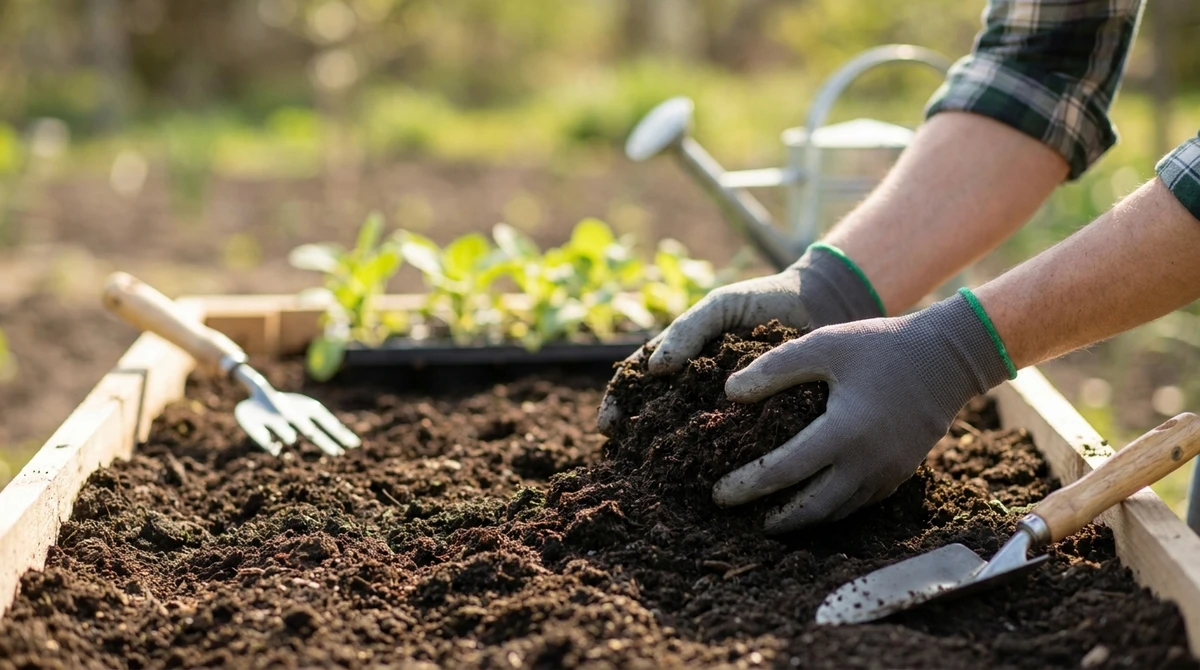
Preparing vegetable garden soil for spring planting begins with testing pH, adding compost or aged manure, loosening compacted beds, and applying mulch. Healthy soil with balanced nutrients and good drainage gives vegetable seeds and transplants the foundation they need to root deeply and grow vigorously through the season.
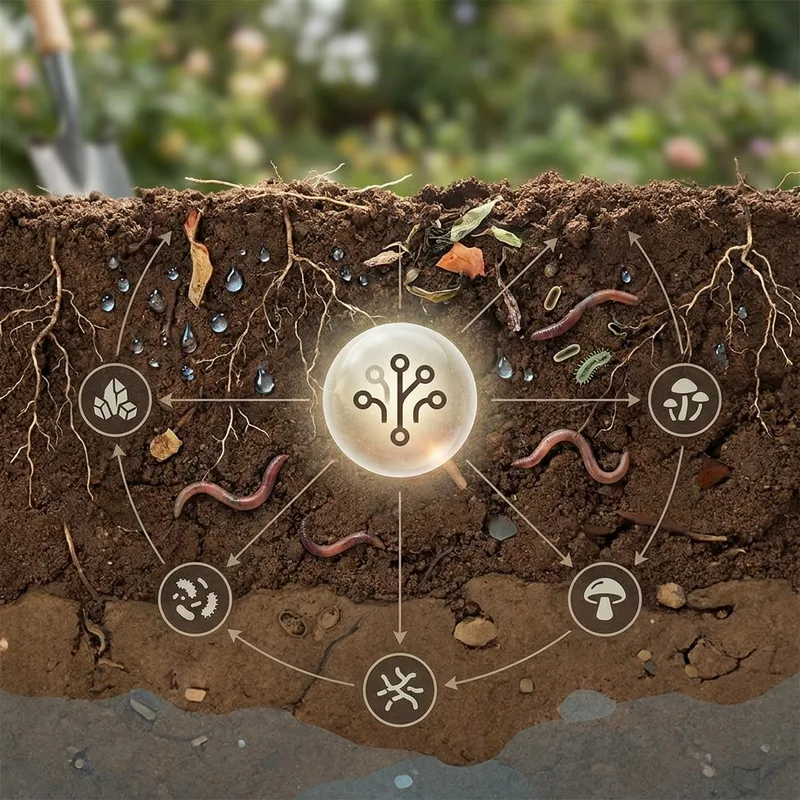
I’ve been gardening long enough to know that soil is not dirt. It’s a living system. Soil health means the whole underground community: bacteria, fungi, earthworms, mineral particles, and organic matter all working together in a relationship I can observe but never fully control. When that system functions, my vegetable plants find what they need without constant intervention from me.
Most vegetables grow best in soil with a pH between 6.0 and 7.0, slightly acidic to neutral, as Michigan State University Extension notes. That range makes nutrients available to roots rather than locking them up chemically. I test my beds every few years with a simple kit, and the results have saved me from guessing wrong with lime or sulfur more than once.
A thin layer of mulch matters too. A 2 to 3 inch layer of organic mulch conserves soil moisture and suppresses weeds without smothering plant roots, according to the Royal Horticultural Society. I’ve written about mulching garden beds in autumn before, and that fall habit pays off by spring. The soil underneath stays workable, biologically active, and ready to plant.
Testing Your Soil pH
Preparing vegetable garden soil for spring planting starts with a soil test. pH determines whether nutrients reach your crops or stay locked away. Most vegetables grow best in soil with a pH between 6.0 and 7.0, slightly acidic to neutral, according to Michigan State University Extension. Outside that range, even fertile soil feeds poorly.
I learned this the hard way my third season, when my tomatoes stalled despite generous compost. A $15 home test kit showed pH 5.3, too acidic for calcium uptake. The fix was pelletized lime, but I’d wasted a whole harvest cycle guessing.
You have two paths. A university extension lab test ($20 to $40) gives precise pH plus nutrient levels and amendment recommendations tailored to your soil. For a quick check, DIY probe kits from any garden center give a ballpark reading. Less precise, but enough to catch major imbalances before planting.
Test in early spring once soil has thawed but before amendments go in. Take six to eight samples from across the bed, mix them in a clean bucket, and submit a cup of that blend. This avoids the trap of testing one spot that doesn’t represent the whole bed.
If pH runs low, lime raises it, but slowly, over months. That’s why I test in March, not May. And once you’ve adjusted, a 2 to 3 inch layer of organic mulch helps buffer the soil through the season.
Amending Your Soil
Preparing vegetable garden soil for spring planting begins with a soil test, then adding organic matter like compost to correct pH and nutrient deficiencies before planting. Most vegetables grow best in soil with a pH between 6.0 and 7.0, slightly acidic to neutral (Michigan State University). Amend accordingly, mulch, and plant.
I have learned, over thirty-some years of digging, that the soil test is the one step gardeners skip at their peril. You cannot guess your way to fertility. The lab report tells you what your ground actually lacks, not what the seed catalog assumes it needs.
If pH runs too low, agricultural limestone raises it; too high, and sulfur brings it down. I spread amendments in late winter, when the frost has just left the ground and the soil crumbles in my hand rather than balling up into a muddy fistful.
Then comes the part I love: the organic matter. Every spring I lay a generous layer of finished compost over the beds, an inch or two, forked in lightly, never roto-tilled to dust. A 2 to 3 inch layer of organic mulch conserves soil moisture and suppresses weeds without smothering plant roots (RHS). I have come to prefer mulching garden beds in autumn as well, so the ground is already half-dressed by the time planting season arrives.
Fertilizers? I use them sparingly and only where the test says so. A balanced organic blend for heavy feeders like tomatoes and brassicas, nothing for the legumes, which feed themselves. Too much nitrogen gives you lush leaves and poor fruit, a lesson I relearn every few years when my peppers sulk.
The Role of Organic Mulch
Once the soil is tested and amended, mulch is what holds that investment in place. A 2 to 3 inch layer of organic mulch conserves soil moisture and suppresses weeds without smothering plant roots, according to the RHS. I spread composted leaves or fine bark around transplants in May, careful to keep the material back from stems.
Mulch acts as a barrier that slows evaporation dramatically. Bare soil dries out fast in spring wind. Covered soil stays workable longer, which matters when you are succession-planting lettuce and spinach.
Weed suppression is the other half. A proper layer blocks the light that weed seeds need. I still get a few interlopers poking through, but they pull easily from damp, covered ground. Without mulch, I would be hoeing every week.
Organic mulches also feed the soil as they break down, unlike plastic or stone. I treat mulch as a slow amendment. For more on choosing materials and seasonal timing, see my notes on mulching garden beds in autumn: how much and which mulch.
Preparing the Garden Bed
Preparing vegetable garden soil for spring planting means testing pH, adding amendments, loosening the bed, and laying mulch. Together, these steps create the loose, fertile ground vegetable seeds need to germinate and thrive.
Once the soil has been tested and amended, and only once it has dried enough that a handful squeezed in your fist crumbles rather than forms a slick mud ball, it is time to work the bed physically. I learned this the hard way one wet April, when I walked onto my clay patch too early and spent the rest of the season undoing the compaction I had caused with my own boots. Patience is everything here. Most vegetables grow best in soil with a pH between 6.0 and 7.0, slightly acidic to neutral (MSU Extension), so if your test results fell outside that range, the amendments from the previous step should already be incorporated and beginning to do their work.
Tilling does not need to be aggressive. I use a garden fork to loosen the top eight to ten inches, working in sections rather than striding across the bed and compressing what I just opened. A broadfork is gentler still. It lifts and aerates without inverting the soil layers, preserving the delicate structure that earthworms and fungi have spent the winter building. If you must use a rototiller, go shallow. Repeated deep tilling shatters soil aggregates and, over time, creates a hardpan layer just below the tine depth that roots cannot penetrate.
After loosening, I rake the surface level and mark out planting rows with a taut string and stakes. Row spacing depends on the crop. Leaf lettuce can go as close as six inches apart, while tomatoes and bush beans want eighteen to twenty-four. I draw shallow furrows with the corner of my hoe, just deep enough to guide seed placement and mark where water should collect. A 2 to 3 inch layer of organic mulch conserves soil moisture and suppresses weeds without smothering plant roots (RHS), so I lay that down the moment seedlings are established, not before, since a thick mulch over freshly sown seed can block germination entirely. For more detail on seasonal mulching choices, see mulching garden beds in autumn: how much and which mulch, since what you do in fall directly shapes how workable the bed is now.
Choosing the Right Vegetables
Preparing vegetable garden soil for spring planting means testing pH, adding organic matter and amendments, loosening the bed, and matching crops to your sunlight and drainage.
Once the soil is ready, the question becomes what to put in it. I always walk the site before choosing. Sunlight drives everything. Tomatoes need at least 6 to 8 hours of direct sunlight per day to set fruit well, according to the Old Farmer’s Almanac. I’ve tried stretching that rule in partial shade; the plants grew lush but set almost no fruit.
Leafy greens like lettuce, spinach, and Swiss chard tolerate far less light, sometimes as few as three or four hours. Root crops like carrots and beets fall somewhere in between. Soil matters just as much. Most vegetables grow best in soil with a pH between 6.0 and 7.0, slightly acidic to neutral, per Michigan State University Extension. If your test came back acidic, potatoes are your one crop that actually prefers it, down around 5.0 to 5.5.
Heavy clay that drains slowly? I’d skip root vegetables and stick with brassicas, which tolerate firmer ground. Sandy, fast-draining beds suit beans and squash, which resent sitting wet. A thick layer of organic mulch keeps moisture steady and feeds the soil biology through the season. Mulching garden beds in autumn pays dividends here.
Maintaining Soil Health Throughout the Season
Spring preparation gets the garden planted, but the soil keeps working long after the last seedling goes in. I think of the growing season as a slow conversation. The plants take, and I give back. Most vegetables grow best in soil with a pH between 6.0 and 7.0, slightly acidic to neutral, so I check mine again midseason rather than assuming the spring reading still holds (MSU Extension). Heavy feeding, rainfall, and microbial activity all shift the chemistry week by week.
I top-dress beds with compost between successive sowings, a thin rake-in, nothing elaborate. I keep a 2 to 3 inch layer of organic mulch on the surface to conserve moisture and suppress weeds without smothering plant roots (RHS). When that mulch breaks down, it feeds the soil. For deeper seasonal context, I follow the same principles outlined in mulching garden beds in autumn: how much and which mulch. Soil health isn’t a one-day project; it’s the whole calendar.
Conclusion and Key Takeaways
So that’s the whole business, really. Test the soil, amend to its particular needs, loosen what’s compacted, mulch what’s bare, and choose vegetables that belong in the spot you’ve got. Most vegetables grow best in soil with a pH between 6.0 and 7.0, slightly acidic to neutral, and I have watched gardens underperform for years simply because nobody bothered to check. A 2 to 3 inch layer of organic mulch conserves soil moisture and suppresses weeds without smothering plant roots. That thin blanket is worth more than any fancy bottle of fertilizer. If you have been putting it off, don’t. The soil is waking up out there, and it would rather you showed up with a fork and a soil test kit than with another round of indecision. I have never met a bed that couldn’t be improved, only beds I waited too long to start on. Get your hands in it.
Frequently Asked Questions
Gardeners ask me the same handful of questions each spring, so I’ll answer them here in one place rather than scattering replies across a dozen seed catalogs.
The first is always about timing. I start when the soil is no longer frozen or waterlogged. Grab a handful, squeeze it, and if it crumbles rather than forming a mud ball, it’s ready. Clear winter debris, loosen the top few inches with a fork, and add compost before early crops like peas and spinach go in.
Then comes the question of what to add. I spread an inch or two of finished compost per bed each spring. Lime only if a soil test indicates the pH has dropped below the ideal vegetable range. Most vegetables grow best in soil with a pH between 6.0 and 7.0, slightly acidic to neutral, per Michigan State University Extension. Never guess on lime.
People also want to know how to test and read the results. I send samples to a university extension lab every few years, which is far more reliable than home kits. The report tells you pH, nutrient levels, and specific amendment recommendations. Follow what your results say. Every garden is different, and a test removes the guesswork entirely.
The bed itself matters too.
Sources
- Michigan State University Extension — Msu (canr.msu.edu)
- 2 to 3 inch layer of organic mulch — Rhs (rhs.org.uk)
- the Old Farmer’s Almanac — Almanac (almanac.com)
Leave a Reply