Introduction: The Importance of Sunlight in Gardening
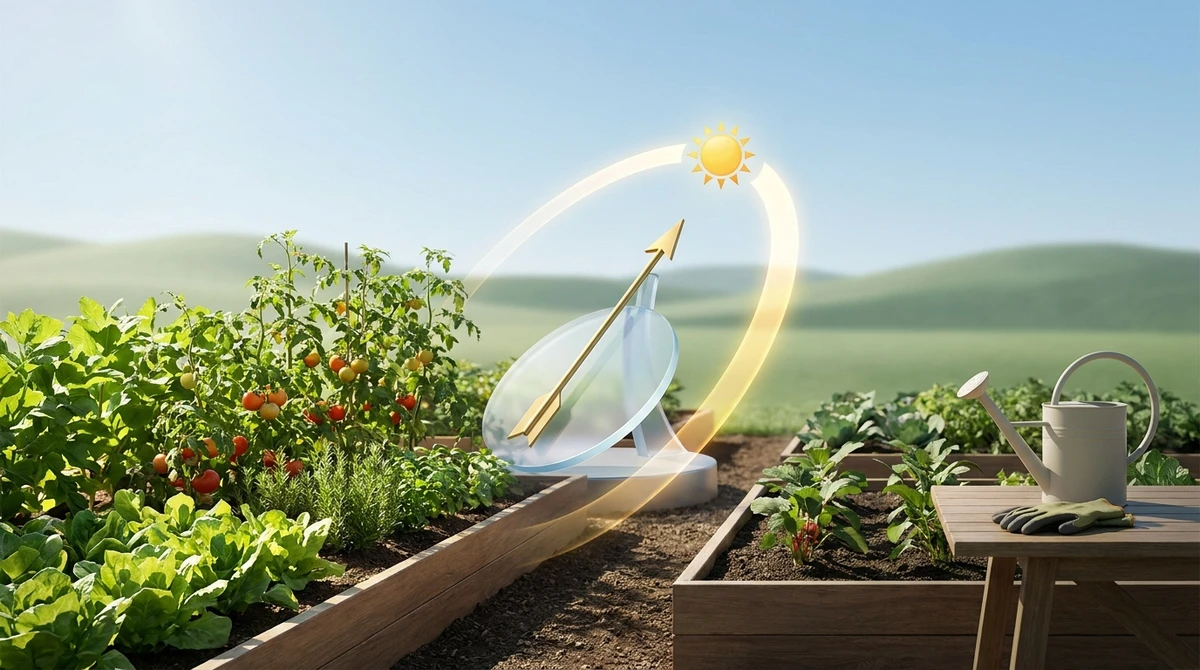
A vegetable garden really needs six to eight hours of direct sun daily for most crops, though leafy greens tolerate as few as three to four. How much sun a vegetable garden needs depends on what you grow: tomatoes demand full sun, while spinach and lettuce will sulk and bolt in it.
I learned the hard way, years ago, when I tucked a row of ‘Brandywine’ tomatoes along a north-facing fence line because the soil there looked promising. Dark, friable, full of earthworms. The plants grew. They flowered. They did not fruit. I waited and waited, watching those vines climb, until August reminded me what I had actually done: I gave them four hours of sun, and they wanted more. Tomatoes need at least 6 to 8 hours of direct sunlight per day to set fruit well, as the Old Farmer’s Almanac confirms plainly. My Brandywines never stood a chance.
Sunlight is the engine of the whole enterprise, the thing that drives photosynthesis, water uptake, and the slow conversion of leaf into fruit. Yet most garden advice treats it as a single number, a flat prescription. “Full sun. Six hours. Done.” That has never matched what I observe in my own beds, where a plant’s performance depends on light working in concert with soil temperature, moisture, and the mulch that mediates both. Sunlight is only the first variable in that equation. I want to get into the nuance here, starting with what sun actually does for a plant and ending with the practical question of how to read your own yard.
Understanding Sunlight Requirements
“Full sun” means six or more hours of direct sun. “Partial sun” means three to six. “Shade” means less than three. The terms sound simple enough, but they hide a complicated truth: not every vegetable reads the same rulebook.
Tomatoes need at least 6 to 8 hours of direct sunlight per day to set fruit well, according to the Almanac. I have pushed tomatoes into shadier corners in late July, hoping the relief would save the plants from heat stress, and I have paid for it in diminished harvests every time. Peppers, eggplants, and winter squash belong to the same demanding camp. Give them anything less than full sun and they sulk.
Leafy greens, on the other hand, are forgiving. Lettuce, spinach, and arugula tolerate partial shade gracefully, and in the heat of summer they actually prefer it. A patch that catches morning light but falls into dappled shade by one o’clock will keep my lettuce from bolting a full two weeks longer than the open bed nearby.
That optimum shifts with every crop, every latitude, and every cloud cover, which is why a flat number never tells the whole story. One gardener exploring the so-called magic amount of sunlight for maximum veggies puts it well: the right conditions matter more than any single measurement (cindyheathwrites.com).
I will say more about how soil and moisture mediate that sunlight later, but the first step is simply knowing what each vegetable actually wants.
The Role of Soil Health and pH
Sunlight alone doesn’t grow a garden. My first raised bed sat in what I measured as a perfect eight-hour blast of afternoon sun, yet my peppers sulked and my spinach bolted before it was worth picking. The soil was exhausted. Compacted, starved of organic matter, and sitting at a pH I’d never bothered to test. Even the strongest light can’t compensate for ground that can’t receive what a plant needs.
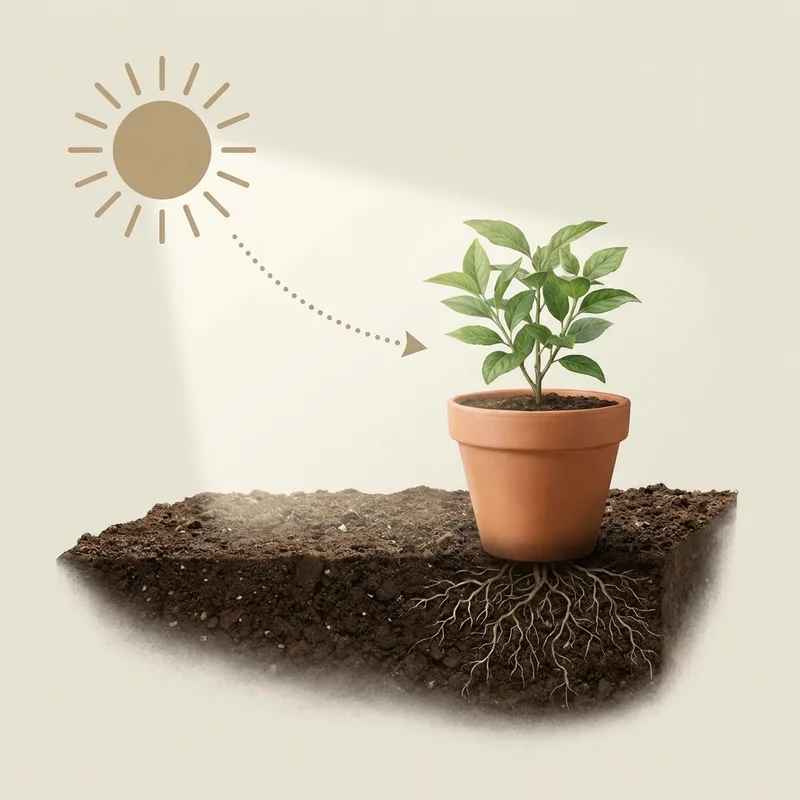
Sunlight drives photosynthesis, but soil is the medium through which roots actually take up the water and minerals that photosynthesis converts into growth. When soil chemistry is off, the plant can be bathed in light and still fail to thrive. Most vegetables grow best in soil with a pH between 6.0 and 7.0, slightly acidic to neutral, as noted by Michigan State University Extension. Outside that range, essential nutrients become locked up. Phosphorus gets scarce in acidic ground; calcium and magnesium slip away in overly sweet soil. No amount of sun fixes what the roots can’t reach.
In my own beds, I’ve watched a shift of half a pH point turn a struggling planting into a productive one. The tomatoes in my south-facing bed always outperformed the ones to the west, and for years I credited the extra hour of light. A soil test finally told the truth: the south bed’s pH was 6.4, while the west bed hovered around 5.8. The west-bed plants were sitting in sun they couldn’t fully use.
This is the part most garden advice skips. We talk about hours of light as if they exist in a vacuum. I’d argue that healthy, well-structured soil actually makes the light you have go further. Roots move easily through loose, organically rich earth, taking up water and nutrients efficiently, which lets the plant capitalize on every photon that strikes its leaves. Compacted or depleted soil, by contrast, leaves a plant stressed and photosynthesizing below its potential, no matter how golden the bed looks at noon. Mulching garden beds in autumn helps maintain that structure season after season, something I write about in more detail in my fall garden cleanup checklist.
The Impact of Mulch on Sunlight and Moisture
I learned the mulch lesson the hard way one July, when my tomato bed baked into a cracked clay pan despite a full day’s sun overhead. The leaves curled, the fruit stalled, and I realized that sunlight alone doesn’t grow vegetables. What the roots experience matters just as much. A 2 to 3 inch layer of organic mulch conserves soil moisture and suppresses weeds (RHS), and that blanket of shredded leaves or straw does something subtler, too: it moderates the soil surface temperature so the sun beating down above doesn’t translate into desiccation below.
Mulch depth also shapes how much light actually reaches the soil, and by extension, the shallow roots and germinating seeds that live in that top inch. Too thin, and you lose the cooling, moisture-holding effect. Too thick, and you’ve created a dark, cold layer that seeds can’t push through. I aim for that two-to-three-inch sweet spot, pulling the mulch back an inch or two around seedlings so they don’t sit in damp contact with decaying material. In my autumn beds, I follow the same principle, more on that in my guide to mulching garden beds in autumn. The right mulch at the right depth is as much about light management as it is about winter protection.
Specific Vegetable Sunlight Needs
After thirty years of trialing vegetables in the same Hudson Valley plot, I’ve stopped thinking in categories like “full sun” and started thinking in plant personalities. Tomatoes are the sun hogs of my garden. Those big, leafy indeterminate vines want heat and light from dawn until mid-afternoon at minimum. The Old Farmer’s Almanac confirms what my ‘San Marzano’ and ‘Brandywine’ plants demonstrate every July: tomatoes need at least 6 to 8 hours of direct sunlight per day to set fruit well (Almanac). Give them less and you’ll get foliage, maybe a few small fruit, and a lot of frustration.
Peppers, eggplants, squash, and cucumbers fall into the same demanding camp. Six hours is the floor; eight is better. Root crops like carrots and beets tolerate a bit more shade, producing respectably with five to six hours. Leafy greens are the forgiving ones. Lettuce, spinach, and arugula actually welcome afternoon shade once June heats up, which is why I tuck them along the north edge of my tomato beds. Two plant families, one footprint, and the taller plants cast exactly the dappled shadow the greens want.
Assessing sunlight honestly means spending a weekend watching your yard. I sketch a simple map on a Saturday morning, note where shade falls at 9, noon, and 3, and repeat the exercise in late June, because a site that looks sun-drenched in April may be swallowed by oak canopy once those trees leaf out. A sun calculator or even a phone timelapse works too, though I still trust my own hourly walk-arounds more than any gadget. Knowing what your particular patch actually delivers is where every productive season starts (cindyheathwrites.com). For gardeners who find their space falls short, I’ve written about overwintering herbs indoors as one way to keep productive when outdoor light simply isn’t enough.
Adjusting for Seasonal Changes
The sun I count on in July is not the same sun that finds my garden in March, or in October. By midsummer, the arc climbs high and lingers, stretching what was once a six-hour exposure into eight or more. Come autumn, that same bed slips back into partial shade as the sun drops lower and the oak to the south casts its long shadow across the lettuce rows.
I have learned to plan around this shifting angle. Cool-season crops like peas, spinach, and mâche go in early, when the canopy is bare and light reaches the soil directly. A 2 to 3 inch layer of organic mulch conserves soil moisture and suppresses weeds (Royal Horticultural Society), which matters most when summer heat bakes the surface. I lay it thicker as the season warms, thinner where spring soil is still cold and slow to wake.
Most vegetables grow best in soil with a pH between 6.0 and 7.0 (Michigan State University Extension), and I test in fall so amendments settle over winter, giving me a clean runway when planting shifts the following spring. I also nudge my late sowings into the sunniest pockets, saving the shadier corners for the leafy greens that tolerate, and even welcome, the respite. For deeper guidance on tucking beds in for winter, see mulching garden beds in autumn: how much and which mulch.
Conclusion: Takeaways for Successful Gardening
After thirty-odd years of pushing seed into soil, I’ve come to think of sunlight as a conversation rather than a commandment. The charts say “full sun” and we obey. But the garden itself tells a subtler story. Light never acts alone. It works in concert with the ground beneath it, and the choices we make about that ground shape how much sun a plant can actually use. Soil that’s too acidic or too alkaline locks up nutrients regardless of how bright the afternoon blaze. Most vegetables grow best in soil with a pH between 6.0 and 7.0, slightly acidic to neutral (https://www.canr.msu.edu/news/soil_ph_and_its_importance_in_the_garden), and a tomato in 6.0 soil will outperform one sitting in 5.0 with twice the light. Then there’s mulch, that quiet moderator. A 2 to 3 inch layer of organic mulch conserves soil moisture and suppresses weeds without smothering plant roots (https://www.rhs.org.uk/soil-composts-mulches/mulch), keeping roots cool enough to keep feeding the top growth that’s busy photosynthesizing. If you’re mulching garden beds in autumn, you’re already halfway there.
So here’s my encouragement: stop reading charts for a weekend and go watch your yard. Track where the shadow falls at nine, at noon, at three. Move a pot of basil from the south bed to the east wall and taste the difference in July. Every garden is its own experiment. Run yours.
Frequently Asked Questions
How many hours of direct sunlight do most vegetable gardens need, and what does “full sun” vs. “partial sun/shade” actually mean?
“Full sun” means six or more hours of direct light daily; “partial sun” lands around three to six. Most fruiting vegetables want that full-sun benchmark, though leafy and root crops forgive less. In my garden, I’ve learned that “full sun” is a flexible phrase. Eight uninterrupted hours is the real ideal.
Which vegetables truly require full sun and which ones can still produce well in partial shade or lower light (3–6 hours)?
Tomatoes need at least 6 to 8 hours of direct sunlight per day to set fruit well (Almanac). Peppers, squash, and cucumbers share that hunger. But leafy greens like spinach, lettuce, and Swiss chard, along with root crops like beets and carrots, tolerate three to six hours, often producing smaller but tender harvests in partial shade.
Can I successfully grow a vegetable garden if my yard gets less than 6 hours of sun, and how will yield and plant size be affected?
Yes, with realistic expectations.
Sources
- Almanac — almanac.com
- cindyheathwrites.com — Cindyheathwrites (cindyheathwrites.com)
- Michigan State University Extension — Msu (canr.msu.edu)
- RHS — rhs.org.uk
Leave a Reply