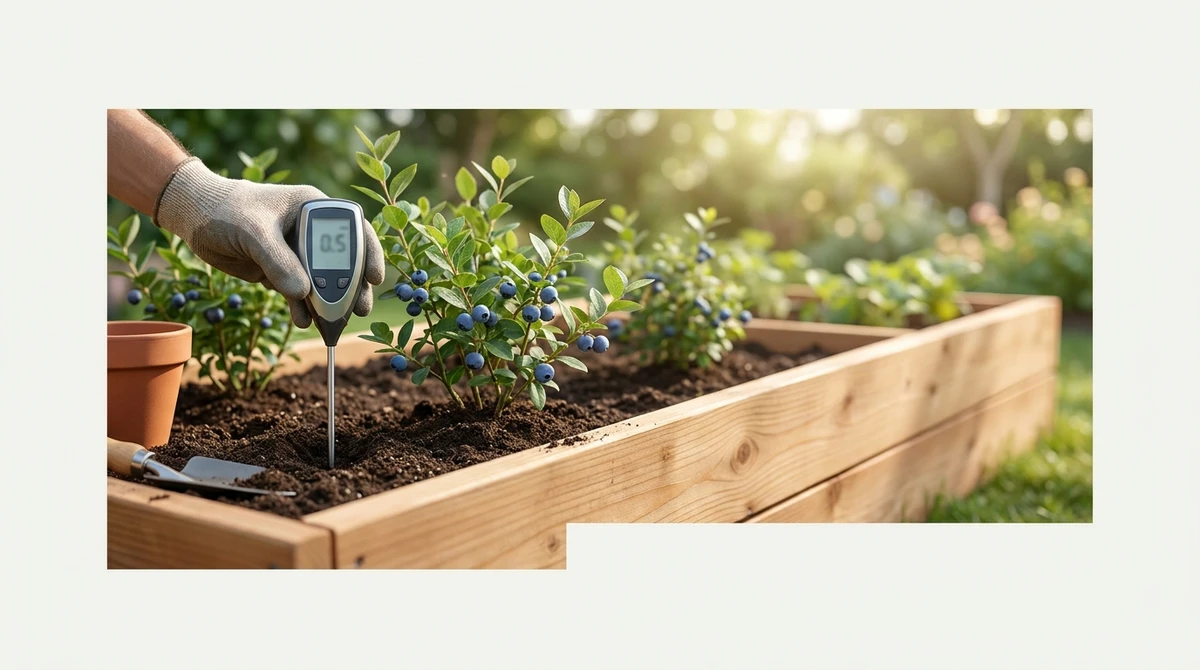
Understanding Soil pH and Its Importance
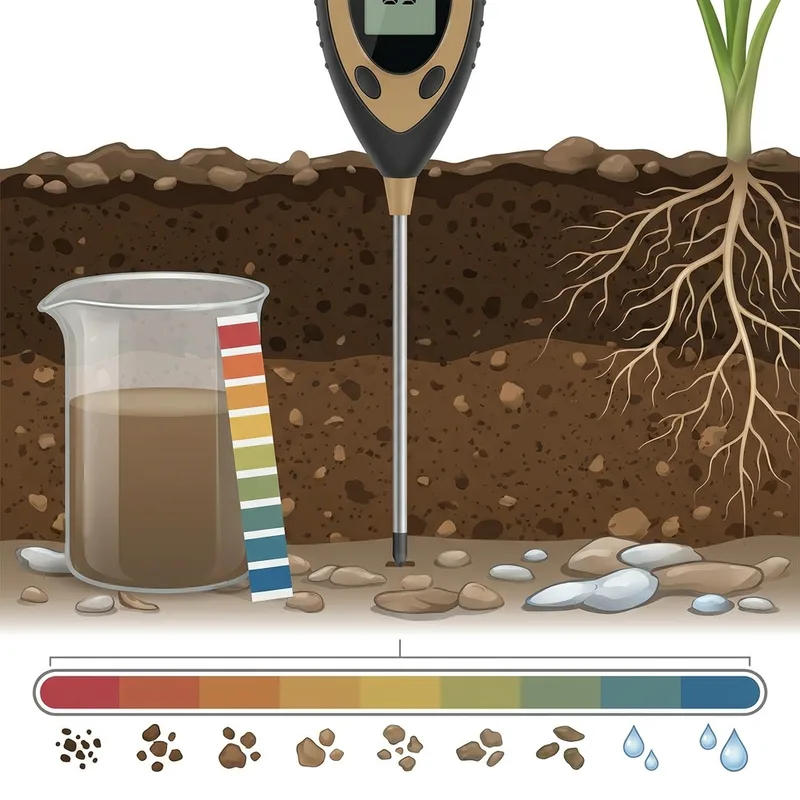
The ideal soil pH for growing blueberries in raised beds sits between 4.5 and 5.5, distinctly more acidic than most garden crops tolerate. Blueberries demand this narrow acidic window because, above it, their roots cannot absorb iron and other nutrients, no matter how rich the soil appears.
Soil pH is simply a measure of acidity or alkalinity on a scale from 0 to 14. Below 7 is acidic; above, alkaline. Most vegetables grow best in soil with a pH between 6.0 and 7.0, slightly acidic to neutral, according to Michigan State University Extension. Blueberries sit well outside that comfort zone, which is why a raised bed, where you control the mix from scratch, solves so much of the headache before it begins.
I learned this the hard way years ago, planting three ‘Bluecrop’ bushes straight into my native clay, which runs around 6.8. The leaves yellowed within a month. Iron chlorosis: the iron was there in the soil, but the pH locked it out of reach. In a raised bed filled with acidic peat and pine bark, those same roots would have fed happily.
A 2 to 3 inch layer of organic mulch conserves soil moisture and suppresses weeds without smothering plant roots, notes the Royal Horticultural Society. For blueberries, that mulch also helps buffer the pH, keeping the surface zone slightly acidic as the bark breaks down. If you’re preparing vegetable garden soil for spring planting anyway, build the bed with blueberries’ chemistry in mind from the start rather than fighting your native soil later.
Ideal Soil pH for Blueberries
The ideal soil pH for growing blueberries in raised beds falls between 4.5 and 5.5, a range far more acidic than most garden vegetables tolerate, because blueberries evolved in boggy, humus-rich woodland edges where organic matter steadily releases organic acids. For context, Michigan State University Extension notes that most vegetables grow best in soil with a pH between 6.0 and 7.0, slightly acidic to neutral, a full point or more above what blueberries demand.
I learned this the hard way years ago, when my first raised bed of ‘Bluecrop’ and ‘Patriot’ sat at pH 6.4 and the leaves yellowed within weeks. Iron was abundant in the soil but locked up and unavailable to the plant at that near-neutral reading. Phosphorus, manganese, and boron behave the same way: each has a narrow availability window tied to pH, and in raised beds, where the planting mix is often a blend of compost and topsoil that tends to creep upward toward neutral, those windows close faster than most gardeners expect.
Hitting 4.5 to 5.5 in a contained bed isn’t a one-time adjustment. I check mine each spring with a simple probe meter, because irrigation water and decomposing compost nudge the number upward over time. The goal is stability in that narrow band, not a single amendment and forget it.
Testing Your Soil pH
The ideal soil pH for growing blueberries in raised beds falls between 4.5 and 5.5, distinctly more acidic than most vegetable gardens, which thrive at 6.0 to 7.0, according to Michigan State University. Testing before planting tells you where you stand.
I use three methods, depending on how much precision I need. A simple probe-style meter pushed into moist soil gives a rough reading in seconds. Liquid dye kits, where you mix soil with a solution and match the color to a chart, run a few dollars and land within half a point. For a new raised bed, I send a sample to the county extension lab. The fee buys a full report with pH, buffer pH, and amendment rates calculated for your soil.
Take samples from three or four spots in the bed, each about four inches deep. Mix them in a clean bucket, then test the blend. One reading from a corner can mislead you, especially in a freshly filled bed where materials haven’t settled.
If your result lands above 5.5, the bed needs acidifying before blueberries go in. Below 4.0, it’s too sour for roots to function well. The sweet spot, that 4.5 to 5.5 band, is where blueberries take up nutrients freely and thrive.
Before you plant, it’s worth preparing vegetable garden soil for spring planting so the bed’s structure and fertility support the pH work ahead.
Adjusting Soil pH for Blueberries
Once your soil test confirms a pH above that 4.5 to 5.5 window, you have to decide how to pull it back down. In a raised bed, that decision matters more than it would in open ground, because the confined volume means amendments concentrate quickly, with no deep subsoil to buffer a mistake.
I lean on natural amendments first. Mixing coarse peat moss into the raised bed fill at roughly 40 to 50 percent by volume gives you an immediate pH drop and improves drainage, a combination blueberries love. Pine bark fines work similarly, and I have had good results layering them through the profile before planting.
For chemical options, elemental sulfur is the standard, and it works by bacterial conversion to sulfuric acid over weeks or months. Timing is everything here. You need to apply it the season before planting, fall for a spring planting, because the soil bacteria that perform the conversion are dormant in cold soil. Work it into the top six inches at a rate your soil test specifies, since the exact amount depends on your starting pH and soil texture.
Once the bed is planted, I top-dress annually with a thin layer of sulfur if the pH creeps up, and I keep a 2 to 3 inch layer of organic mulch on the surface. The RHS notes that this practice conserves soil moisture and suppresses weeds without smothering plant roots. Pine needles and bark mulch are my go-tos; they break down slowly and tend toward acidic, which suits the bed’s chemistry. The same logic applies when preparing vegetable garden soil for spring planting, though most vegetables prefer a pH between 6.0 and 7.0, a full point above where blueberries thrive.
Best Practices for Growing Blueberries in Raised Beds
Raised beds dry out faster than grade-level soil, and blueberries, shallow-rooted and thirstier than most shrubs, feel that pinch quickly. In my 4×8 cedar frames, I check the top two inches every morning by hand through July and August. If it’s barely cool, I water deeply, not lightly. A slow soak at the base keeps the surface roots happy without wetting the foliage.
Sunlight matters as much as moisture. Blueberries want full sun for the sweetest fruit, meaning six to eight hours of direct light. My south-facing beds hit that mark by mid-May. If your site gets less, you’ll still get berries, just fewer and tarter. For a deeper look at siting, I keep notes at how much sun a vegetable garden really needs.
Mulch is where raised-bed blueberry culture earns its keep. A 2 to 3 inch layer of organic mulch conserves soil moisture and suppresses weeds without smothering plant roots (RHS). I use pine bark or partly rotted oak leaves, both of which acidify gently as they break down, nudging pH down rather than neutralizing it the way hardwood chips might. Replenish each spring before the canopy fills in.
Common Mistakes to Avoid
Common Mistakes to Avoid
The single biggest mistake I see, and made myself once with a row of ‘Patriot’ bushes that sat there looking sulky for two seasons, is assuming that any decent raised-bed soil will do. Most vegetables thrive in soil with a pH between 6.0 and 7.0, slightly acidic to neutral, as Michigan State University Extension notes. Blueberries want none of that. They need pH between 4.5 and 5.5, and if you skip testing because the soil “looks rich,” you’ll get chlorotic leaves and sparse fruit before you understand what happened. Test before planting. Test again a year later.
Overwatering runs a close second. Raised beds drain faster than grade-level soil, which lulls gardeners into giving blueberries too much, but the shallow, fibrous roots rot quickly in persistently wet mix. I let the top inch dry between deep soaks, and I keep a 2 to 3 inch layer of organic mulch on the surface to conserve moisture without smothering the roots, per the Royal Horticultural Society. Pine bark is my go-to.
Finally, don’t tuck blueberries into partial shade because you ran out of sunny real estate. They fruit poorly without full sun, and the pH work won’t compensate. For a fuller discussion of light requirements across the garden, see how much sun a vegetable garden really needs.
Conclusion and Key Takeaways
After twenty seasons of growing blueberries in raised beds, I can tell you this: pH is everything. Most vegetables thrive between 6.0 and 7.0, but blueberries demand far more acidic ground, and that narrow window determines whether your bushes flourish or simply survive. I’ve watched gorgeous ‘Patriot’ and ‘Bluecrop’ plantings stall out because the soil crept half a point too high.
Test your beds before planting. Test again each spring. Adjust with elemental sulfur or peat moss, and keep a 2 to 3 inch layer of organic mulch to conserve moisture and suppress weeds without smothering roots. Raised beds give you an advantage here, because you control the mix from day one rather than fighting native clay.
If you’re also preparing beds for other crops, check my notes on preparing vegetable garden soil for spring planting. The pH goals differ, and mixing the two without planning costs you a season.
Get the pH right, and the berries follow.
Frequently Asked Questions
What is the ideal soil pH range for growing blueberries successfully in raised beds?
Blueberries thrive in acidic soil between pH 4.5 and 5.5, and this is the single most important factor for success in raised beds. Below 4.5, nutrients lock up; above 5.5, iron becomes unavailable and leaves yellow. I aim for 5.0 in my beds, the sweet spot for nutrient uptake.
How can I test the soil pH in my raised beds and how often should it be checked for blueberries?
Use a digital pH meter or send a sample to your county extension lab. I rely on both, the meter for quick checks and lab tests every other spring for accuracy. Test at least once a year, ideally in early spring before new growth begins, and again after any major amendment.
What materials or amendments (e.g., sulfur, peat moss, pine bark) should I use to lower and maintain soil pH for blueberries in raised beds?
Elemental sulfur lowers pH slowly over months, so work it in the season before planting. For instant acidity, I mix peat moss at roughly 50 percent of the bed volume. Pine bark fines add acidity and improve drainage. A 2 to 3 inch layer of organic mulch conserves soil moisture and suppresses weeds without smothering plant roots (RHS).
How do irrigation water, fertilizers, and surrounding soil affect pH over time in raised beds, and how can I keep it stable for blueberries?
Tap water often runs alkaline and nudges pH upward with every watering, so I collect rainwater when I can. Acidic fertilizers like ammonium sulfate help hold pH down while feeding. Raised beds isolate roots from surrounding alkaline soil, but pH still drifts. Test twice yearly and re-amend with sulfur as needed.
Can I grow blueberries in regular garden soil or containers if I can’t reach the recommended pH, and what adjustments or alternatives are needed?
If your native soil sits above pH 6.0, and most vegetables grow best in soil with a pH between 6.0 and 7.0 (MSU Extension), don’t fight it. Grow blueberries in containers filled with pure peat and pine bark, or build raised beds with fresh acidic mix. Half-measures in native alkaline soil waste years.
Sources
- Michigan State University Extension — Msu (canr.msu.edu)
- RHS — rhs.org.uk
Leave a Reply