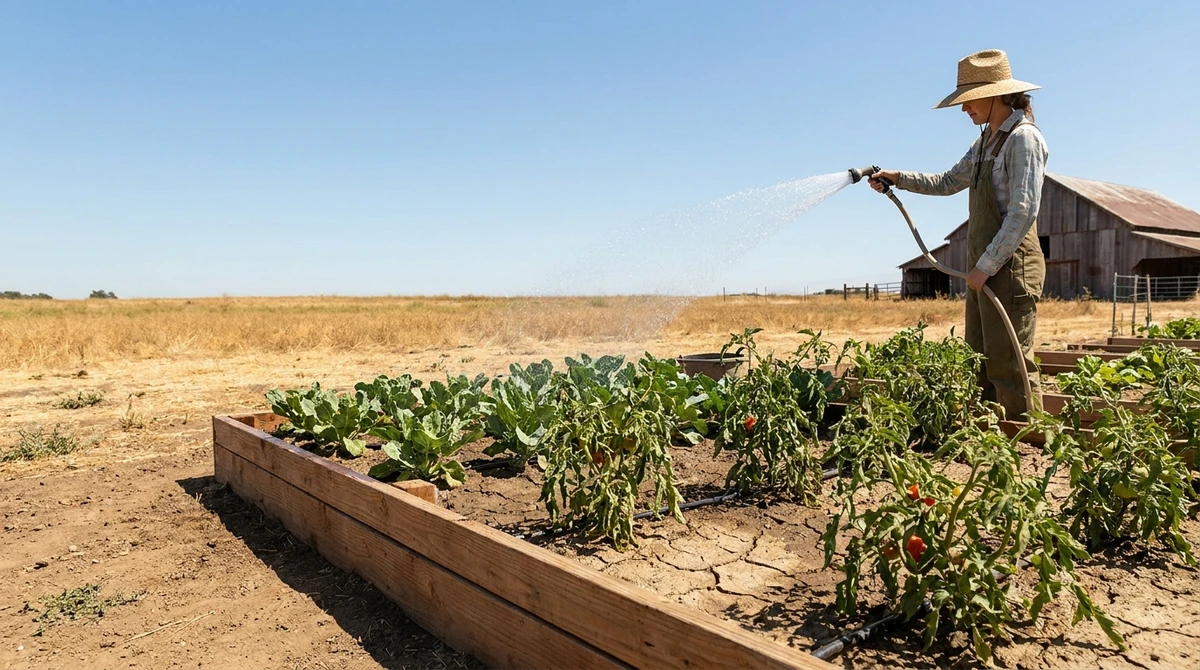
Understanding the Impact of Dry Spells on Vegetable Beds
Watering a vegetable bed through a dry spell means giving roots a deep, consistent soak before stress sets in, then holding that moisture in place with mulch so the soil never fully dries between sessions. Timing matters more than volume. Water early, watch the leaves, and act before plants wilt.
I learned this the hard way one July when my lettuces went crisp at the edges and the beets stalled at golf-ball size. A dry spell doesn’t just starve roots of water. It tightens the soil surface, locks up nutrients, and pushes shallow-rooted crops like spinach and radishes into premature bolting. Tomatoes and peppers hold out longer, but they will drop flowers and set no fruit once the top layers stay parched for days. Most vegetables grow best in soil with a pH between 6.0 and 7.0, slightly acidic to neutral, and that chemistry still needs moisture to function. Dry soil can’t move nutrients to the roots at all.
Timely watering is the difference between a bed that pauses and one that collapses. I check the top inch with my finger each morning, and if it feels dry I soak that bed deeply the same day. A 2 to 3 inch layer of organic mulch conserves soil moisture and suppresses weeds without smothering plant roots, as the RHS advises. In my beds, that mulch layer is what keeps a three-day dry stretch from turning into a crisis. Bare soil loses water fast to evaporation, while mulched soil stays workable and cool underneath.
For more on soil preparation that builds drought resilience from the ground up, see preparing vegetable garden soil for spring planting.
The Importance of Mulch in Moisture Conservation
To water a vegetable bed through a dry spell, give crops a deep, infrequent soak at the roots, mulch heavily to lock in moisture, and water at dawn to cut evaporation losses.
I learned the mulch lesson the hard way one July when my tomatoes wilted by noon despite a thorough soaking the evening before. The soil was bone-dry again by morning, baked open under a relentless sun. A thick blanket of organic matter changes that equation entirely. It shades the surface, slows evaporation, and keeps the root zone cool enough that plants can actually take up the water you give them.
The depth matters more than gardeners often realize. A 2 to 3 inch layer of organic mulch conserves soil moisture and suppresses weeds without smothering plant roots, according to the Royal Horticultural Society. I lay straw or shredded leaves at that depth around my tomatoes, beans, and kale, pulling the material back an inch or two from each stem so the crowns can breathe. Any deeper and you risk trapping too much moisture against the base, inviting rot.
Organic mulches earn their keep beyond simple moisture retention. They break down slowly, feeding the soil life that builds structure and helps your beds hold water like a sponge. I notice a real difference in my vegetable garden’s sun exposure when the ground beneath is mulched versus bare. If you want to go deeper on timing and materials, our guide to mulching garden beds in autumn covers the seasonal side.
In a dry spell, mulch is not decoration. It is the difference between watering every other day and watering twice a week.
Effective Watering Techniques During a Dry Spell
Watering a vegetable bed through a dry spell means soaking the root zone deeply once every several days rather than sprinkling lightly each evening. Time each session for early morning so moisture reaches roots before midday heat drives evaporation, and hold that moisture in place with a thick layer of organic mulch. That is the whole strategy I return to every July in my own beds.
I water at first light, before the sun is over the fence. The soil is cool, the air is still, and every drop I put down stays where I aim it. Evening watering works too, but leaves stay wet overnight, and in my beds that is an open invitation to the fungal spores that plague late-season tomatoes. Morning gives foliage time to dry by noon.
The goal is not a damp surface. It is a soaked root zone. I lay a hose at the base of each plant and let it trickle until the top several inches are fully saturated, then move on. A light daily sprinkle trains roots to linger near the surface, where they dry out first. Deep, infrequent watering sends them down into cooler, steadier soil.
Mulch is what makes that deep watering hold. I lay a 2 to 3 inch layer of organic mulch over the bed after each good soaking, because that depth conserves soil moisture and suppresses weeds without smothering plant roots (RHS). Straw, shredded leaves, or composted grass clippings all serve. I keep the mulch back an inch or two from each stem so the crowns can breathe.
Most vegetables grow best in soil with a pH between 6.0 and 7.0, slightly acidic to neutral (Michigan State University Extension). Within that range, roots take up water efficiently even when rainfall is scarce. If you are preparing vegetable garden soil for spring planting, a pH check now saves stress later in a drought summer.
Signs Your Vegetable Bed Needs Water
Watering a vegetable bed through a dry spell means watching for drought stress and checking soil moisture before watering. Look for wilting leaves, dry topsoil, and slowed growth. Push a finger two inches down. If it’s dry, water deeply. Most vegetables grow best in soil with a pH between 6.0 and 7.0, and stressed soil shows its thirst fast.
I start every morning walk with a mug of coffee and a quick scan of the beds. Cucumbers are my early-warning system. Their broad leaves go limp before anything else in the patch, sometimes by mid-morning even when the soil still feels damp an inch down. That limpness is the plant pumping water out faster than its roots can pull it in. If those same leaves perk up by evening, the bed is managing. If they stay limp into dusk, the bed needs water.
Tomatoes tell a different story. Their leaves curl upward along the edges, a tidy defensive roll that reduces surface area. It looks alarming, but it’s a measured response, not a crisis. I’ve watched ‘San Marzano’ vines curl tightly for three straight days and still set fruit fine once the temperature dropped. Check the growing tomatoes in containers on a sunny patio notes if you’re growing in pots, where stress signals arrive faster and more dramatically.
The finger test is my go-to. I push a finger straight down about two inches. Cool and gritty means hold off. Dry and warm means water. A trowel gives a deeper read. Slice a wedge out and look at the color change. Dark, cohesive soil holds moisture; pale, crumbly soil does not.
Leaf color shifts too. Swiss chard and lettuce turn slightly dull, losing that waxy sheen before they wilt. Squash leaves feel papery and lose their snap.
Additional Tips for Managing Vegetable Beds in Dry Conditions
Beyond watering and mulching, a few structural choices make a vegetable bed measurably more resilient in dry weather. I think of these as the slow fixes, things you set up before the heat arrives, not during it.
Companion planting for moisture retention works by creating a living mulch. Low-growing companions like thyme, oregano, or trailing nasturtiums shade the soil surface around taller crops, reducing evaporation between waterings. I interplant lettuces beneath my pole beans every June. The beans cast high shade, and the lettuce holds about a week longer before bolting than it does in open bed. Borage, planted near tomatoes, draws deep moisture up through its taproot and drops it back to the surface as leaf litter. None of this replaces irrigation, but it stretches the intervals between soakings.
Shade cloth is the other lever. A 30 to 40 percent shade cloth suspended on hoops over leafy crops takes the edge off afternoon sun and can cut soil surface temperatures enough to slow moisture loss. I use it on my late-summer lettuce and young transplants. Tomatoes and peppers, though, want full sun; shading them reduces yield. Most vegetables grow best in soil with a pH between 6.0 and 7.0, slightly acidic to neutral (MSU Extension), and a bed in that range handles drought better because roots develop fully. A 2 to 3 inch layer of organic mulch conserves soil moisture and suppresses weeds without smothering plant roots (RHS). That depth matters here, too, under the shade cloth.
Conclusion: Successful Vegetable Gardening During Drought
A dry spell tests every habit you’ve built into your beds. The gardeners who sail through are the ones who mulched before the heat arrived, watered deeply at the base, and paid attention to what the soil told them.
I think back to the July my tomato rows went three weeks without rain. A two-inch layer of straw, laid down in June, kept the ground beneath it dark and cool while the exposed paths cracked. That is the strategy in miniature. Mulch holds moisture, deep watering reaches roots, and observation tells you when to act.
Most vegetables grow best in soil with a pH between 6.0 and 7.0, slightly acidic to neutral, as Michigan State University notes, and that range matters more in drought, because stressed roots in poor soil simply give up sooner. Pairing good pH with a moisture-retentive mulch gives roots the conditions to keep working when rain disappears.
If you take one thing from this, let it be timing. Lay mulch while the soil still carries spring moisture. Water at the base, slowly, in the cool of morning. Check the soil with your fingers before reaching for the hose. These habits are simple, but they are what separate a bed that stumbles through drought from one that keeps producing.
For more on soil preparation that sets the stage, see preparing vegetable garden soil for spring planting, and for mulching depth and timing, when to mulch strawberry beds and how deep covers principles that translate to any vegetable row.
Frequently Asked Questions
How often should I water my vegetable bed during a dry spell, and how can I tell when it truly needs water?
Check the soil before watering. Push your finger an inch or two into the bed; if it feels dry at that depth, it is time to water. In a dry spell, most vegetable beds need water every two to four days, though sandy soil dries faster and raised beds drain more quickly than in-ground plots.
How much water do different vegetables need in prolonged dry conditions, and should I water deeply or lightly?
Water deeply rather than lightly. Shallow watering encourages shallow roots, which dry out fast. Most vegetables want about an inch of water per week, applied in one or two deep sessions. Tomatoes, squash, and brassicas have deeper root systems and benefit from a thorough soaking, while lettuce and radishes need steadier surface moisture.
What is the right time of day and most effective method (hose, watering can, drip irrigation, soaker hose, etc.) to water during a drought to reduce waste and evaporation?
Water early in the morning, before the sun is high. Soil absorbs the moisture, and foliage has time to dry before nightfall, which reduces disease risk. Drip irrigation and soaker hoses deliver water directly to the root zone with minimal loss. Overhead sprinklers waste more to evaporation.
How can I conserve moisture and protect my vegetable bed in a dry spell using mulches, soil improvements, shade, or other techniques?
A 2 to 3 inch layer of organic mulch conserves soil moisture and suppresses weeds without smothering plant roots, according to the RHS. Adding compost improves the soil’s ability to hold water. A temporary shade cloth over leafy crops during the hottest part of the day also cuts stress.
What signs of stress or damage should I watch for in vegetables during a dry spell, and how can I adjust my watering to prevent overwatering or underwatering?
Look for wilting leaves by late afternoon, curling foliage on tomatoes, or dry, brittle edges on leafy greens. If plants wilt in the heat but recover by morning, they are hanging on. Water deeply when the top inch is dry, but do not waterlog the soil. Roots need oxygen as much as moisture.
Sources
- RHS advises — Rhs (rhs.org.uk)
Written by Nell Harrow, Writes the StudioKit garden notes
Nell Harrow is the house byline for the StudioKit garden notes. Articles published under this name are written and edited by the StudioKit editorial team.
Leave a Reply