Understanding the Importance of Mulching Strawberry Beds
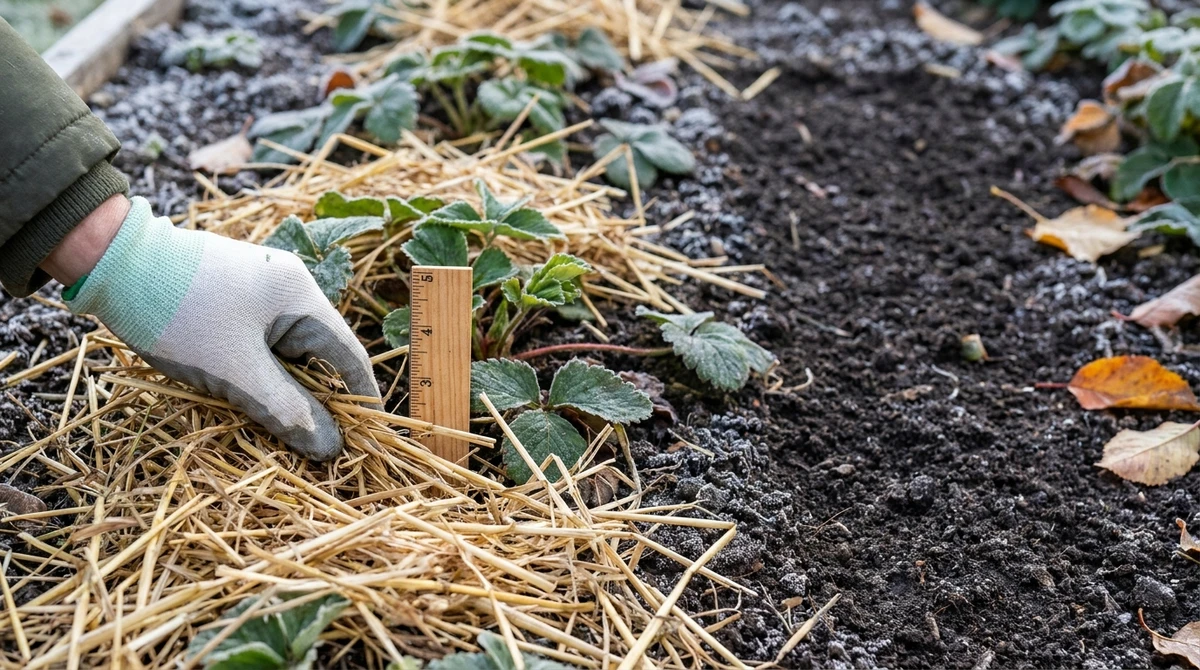
Mulch strawberry beds in late fall after several hard frosts, applying a 2 to 3 inch layer of organic mulch, typically straw or pine needles, around established plants. In cold climates, this timing protects crowns from winter injury. In spring, pull mulch back as growth resumes.
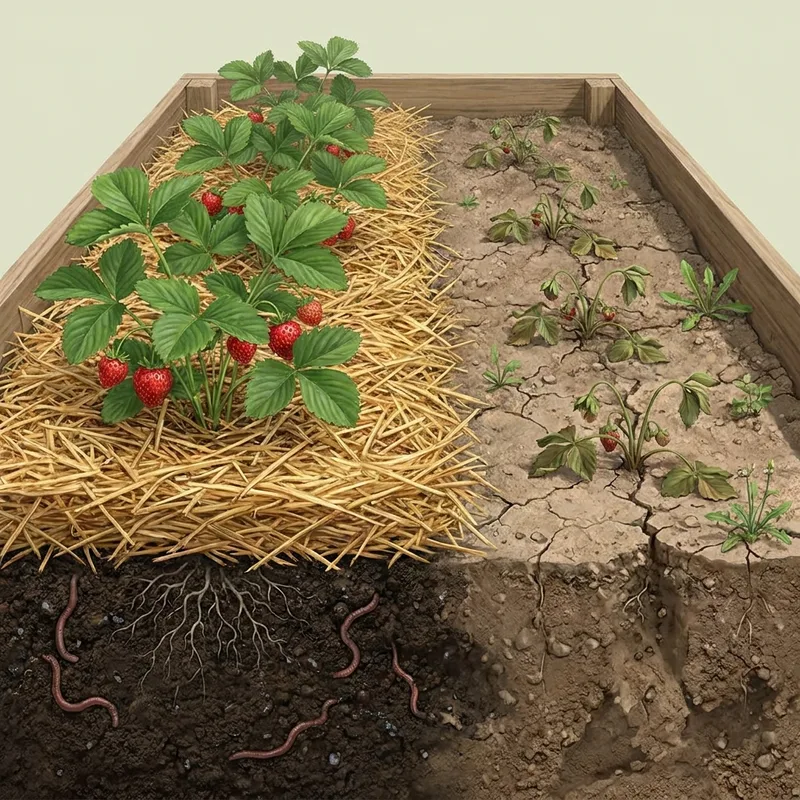
That depth matters more than most gardeners realize. A 2 to 3 inch layer of organic mulch conserves soil moisture and suppresses weeds without smothering plant roots, according to the Royal Horticultural Society. Go shallower and you lose the moisture-locking benefit. Go deeper and the crowns sit in damp, airless conditions that invite rot.
In my Zone 5b beds, I’ve watched unmulched plants heave out of the ground during freeze-thaw cycles, roots torn, crowns exposed. Mulch acts as a thermal blanket, keeping soil temperatures stable through January’s swings. The same layer that insulates in winter keeps roots cool and moist during July’s drought, cutting my watering roughly in half. For a deeper look at seasonal timing across mulch types, I keep notes alongside my guide on mulching garden beds in autumn.
Weed suppression is the quiet benefit I undervalued for years. Strawberries spread by runners, forming a dense mat, but that mat cannot compete with chickweed or purslane erupting beneath it. A proper mulch layer starves those weed seeds of light before they ever break the surface.
When to Mulch Strawberry Beds
Mulch strawberry beds twice a year: in late spring after soil warms, and in late fall before hard freezes. Apply a 2 to 3 inch layer of organic mulch to conserve moisture, suppress weeds, and protect crowns. Timing matters. Mulch too early in spring and cold, wet soil rots the crowns.
I learned that lesson the hard way my third season, when a late April mulching left my ‘Jewel’ and ‘Honeoye’ crowns sitting in cold mud for weeks. They survived, barely. Now I wait, hand in the soil first. When the top inch reads warm and workable, usually mid-May in my Zone 5b beds, I lay mulch down. That’s the signal: soil temperature, not the calendar. A thin, patchy existing layer or visible weed germination tells me it’s time. I’ve tested that 2 to 3 inch depth across straw, shredded leaves, and pine needles alike, and it holds true every time, conserving moisture and suppressing weeds without smothering roots. See mulching garden beds in autumn: how much and which mulch for broader depth guidance.
Fall is the other half. After the first hard frost knocks the foliage flat, usually early November here, I tuck the beds in. Wait too long and heaving frost cycles lift the crowns right out of the ground, tearing root contact. Mulch too early and the plants haven’t hardened off, inviting rot. The window is narrow: foliage dormant, soil not yet frozen solid. That’s when a 2 to 3 inch blanket earns its keep, holding crowns steady through the freeze-thaw months.
How Deep Should You Mulch Strawberry Beds?
Mulch strawberry beds in late fall after the ground begins to freeze, applying a 2 to 3 inch layer of organic mulch around the crowns. This depth conserves soil moisture, suppresses weeds, and insulates roots through winter without smothering the plants.
That depth matters more than most gardeners realize. Too thin, and the frost heaves the crowns right out of the soil come January. Too thick, and the crowns sit in a damp, airless pocket that invites rot. The Royal Horticultural Society advises that a 2 to 3 inch layer of organic mulch conserves soil moisture and suppresses weeds without smothering plant roots. I have followed that guidance in my own beds with clean straw and shredded leaves, and it has served me well across every season.
Strawberry crowns sit high in the soil, almost proud of it, which is what makes them vulnerable. A two-inch blanket settles loosely enough to let the crowns breathe while still buffering the root zone below. Push past three inches and the material packs against the growth point, trapping moisture where the plant needs air.
I check my beds after rain. If the mulch has matted flat against the crowns, I fluff it back. For more on seasonal timing, our piece on mulching garden beds in autumn walks through which materials suit late-season work.
Types of Mulch for Strawberry Beds
I’ve tried just about every material on my strawberry beds over the years, from oat straw to shredded leaves to black plastic, and each one carries its own trade-offs. The organic mulches, including clean wheat or oat straw, pine needles, shredded deciduous leaves, and even well-aged compost, do double duty in a way that inorganic mulches simply can’t. They hold moisture, suppress weeds, and then break down into something the soil actually wants. A 2 to 3 inch layer of organic mulch conserves soil moisture and suppresses weeds without smothering plant roots, according to the RHS guidance on mulching.
Straw remains my default. It’s loose enough that runners can root through it, and it doesn’t mat down the way grass clippings do after a rain. Pine needles are lovely if you have them. They’re light, they don’t compact, and I’ve never seen them meaningfully acidify a bed despite the old garden myth. Wood chips I use only on the paths between beds, never directly crowning the plants. They’re too coarse and too slow to settle around a strawberry crown.
Inorganic mulches, including black plastic and landscape fabric, have their place, especially in commercial plantings where moisture retention and clean fruit matter more than soil-building. But they offer nothing back at season’s end, and I find them grim in a home garden. For more on how organic mulches fit into the broader autumn routine, I keep notes in my mulching garden beds in autumn: how much and which mulch piece.
Maintaining Mulched Strawberry Beds
Mulching isn’t a one-and-done task. Once that layer is down, the beds need watching through the season. Moisture, weeds, and the slow shift from spring cool to summer heat all change what the mulch is actually doing for the plants.
I check moisture by feel, pulling the mulch back an inch or two and pressing the soil underneath. A 2 to 3 inch layer of organic mulch conserves soil moisture and suppresses weeds without smothering plant roots, according to the RHS. But that layer can also hide dry soil if you don’t verify. Strawberries are shallow-rooted, so even a brief drought can set them back. If the top inch of soil is dry, I water deeply rather than sprinkling.
Weeds still come through, especially around the edges. I pull them small, before they tap into the moisture the mulch is meant to keep for the strawberries. A dandelion left two weeks becomes a competitor you can’t remove without disturbing the crown.
As the season shifts, so does the mulch. In early spring I pull it back from the crowns to let them warm and dry, preventing rot. Once berries begin to ripen, I tuck fresh straw directly under the fruiting trusses. Clean berries need clean contact. For a broader look at seasonal mulch adjustments across the garden, see mulching garden beds in autumn: how much and which mulch.
Common Mistakes to Avoid When Mulching
I’ve killed more strawberry crowns with kindness than I care to admit, usually by piling mulch too deep, too early, or with the wrong material entirely.
The most common error is over-mulching. A 2 to 3 inch layer of organic mulch conserves soil moisture and suppresses weeds without smothering plant roots, according to the RHS. Push past that depth and you risk trapping moisture against the crown, inviting rot. Strawberry crowns sit just above the soil line. Bury them under four inches of straw and they suffocate slowly.
Material choice matters as much as depth. Dyed landscape mulch, fresh wood chips, and rubber nuggets have no place in a strawberry bed. Fresh wood chips tie up nitrogen as they decompose, and rubber leaches who-knows-what into soil where I’m growing food. Clean oat or wheat straw, pine needles, and shredded leaves are what I reach for. They’re loose enough to breathe and break down into something the plants can actually use.
The third pitfall is ignoring seasonal shifts. What protects in December can smother in April. I pull winter mulch back once growth resumes in spring, leaving a thin layer for moisture. Then I reapply in late fall once the soil has cooled but before hard freeze, timing that’s more art than formula. Most vegetables grow best in soil with a pH between 6.0 and 7.0, slightly acidic to neutral, as Michigan State University Extension notes, so if you’re mulching with pine needles long-term, check pH occasionally. For a broader seasonal routine, my fall garden cleanup checklist walks through the timing.
Takeaways on Mulching Strawberry Beds
Mulch twice, hold to the depth, and let the bed tell you when it needs attention. Late fall, after the soil has cooled but before hard freeze locks the ground, that is your window for winter mulch in my Zone 5b beds. Pull it back in spring once new growth stirs. For summer, a thin refresh keeps moisture steady and weeds down. A 2 to 3 inch layer of organic mulch conserves soil moisture and suppresses weeds without smothering plant roots (RHS). That range holds across straw, pine needles, and shredded leaves. I check it with my fingers, tucking it around the crowns but never burying them. Deeper invites rot, crown rot especially, which I learned the hard way one wet June. Go get the mulch down this week if your nights are dropping into the low thirties. The plants are ready even if you are not. And if you have a method that works, a timing trick, a material I haven’t tried, I want to hear about it. Drop a note in the comments with your zone and your mulch of choice. Every bed teaches something different, and mine is still teaching me.
Frequently Asked Questions
When is the best time of year to mulch strawberry beds (e.g., first fall, before winter, early spring) in different climates?
In my Zone 5b beds, I lay mulch after several hard frosts, usually late November, once plants have gone dormant but before the ground freezes solid. In warmer climates, a light summer mulch suffices. Northern gardeners should time winter mulch to that narrow window between dormancy and deep freeze. For broader autumn timing, I reference my notes on mulching garden beds in autumn: how much and which mulch.
How deep should mulch be applied on strawberry beds for effective winter protection and summer moisture/weed control?
I’ve found that a 2 to 3 inch layer of organic mulch is the sweet spot for conserving soil moisture and suppressing weeds without smothering plant roots. Two inches is ideal for summer, enough to cool soil and hold moisture. Three inches of loose straw gives crowns the insulation they need through January freezes.
What types of mulch are best for strawberries (e.g., straw, pine needles, wood chips), and what are the pros and cons of each?
Clean oat or wheat straw is my default. It insulates well, breaks down slowly, and pulls away cleanly in spring. Pine needles acidify slightly and mat nicely on slopes but can compact too tightly over crowns. Wood chips look tidy but, in my experience, harbor slugs and tie up nitrogen as they decompose.
How do you properly apply, maintain, and remove mulch around strawberry plants without causing rot or disease?
I loosen straw with a fork once growth resumes, leaving a thin layer as summer mulch rather than removing it entirely. Keep mulch pulled back from crowns so air circulates. In my beds, I’ve learned the hard way that anything mounded against the crown invites rot, especially in wet springs.
How does mulching affect strawberry yield, plant health, and overwintering, and are there any common mistakes to avoid?
Proper mulch stabilizes soil temperature, conserves moisture, and protects crowns from heaving, all of which support yield. The most common mistake I see is mulching too early in fall, which traps warmth and delays dormancy. Another is piling mulch against crowns, which invites rot. Timing and depth matter more than material.
Sources
- Royal Horticultural Society — Rhs (rhs.org.uk)
Leave a Reply