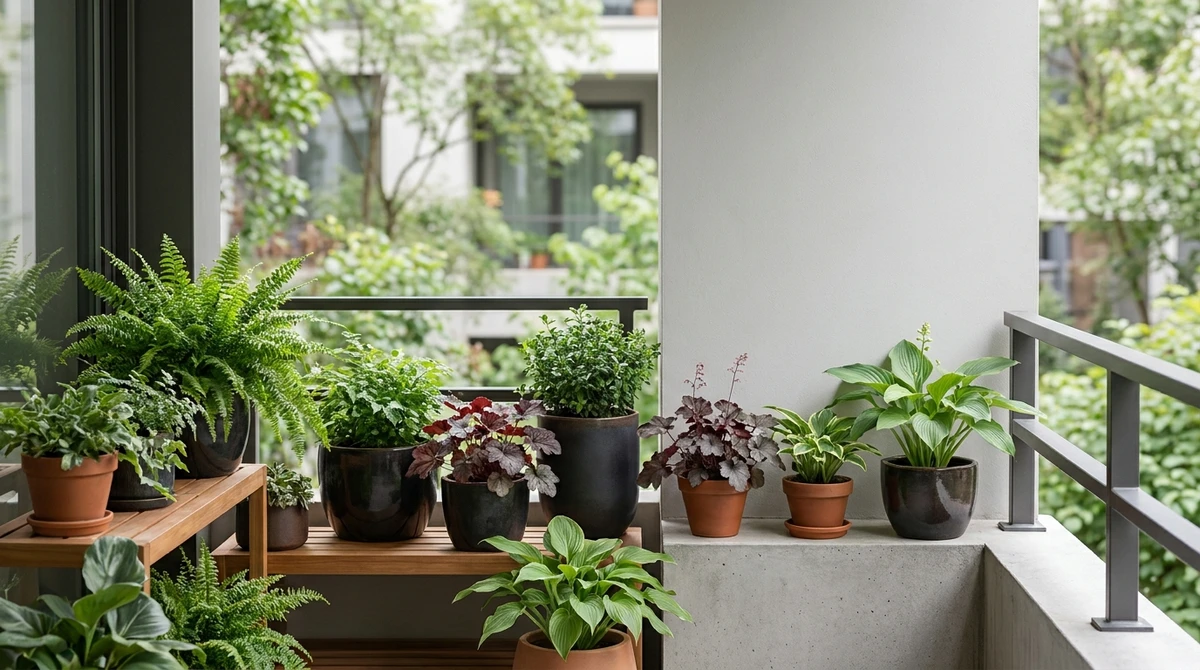
Understanding Your North-Facing Balcony
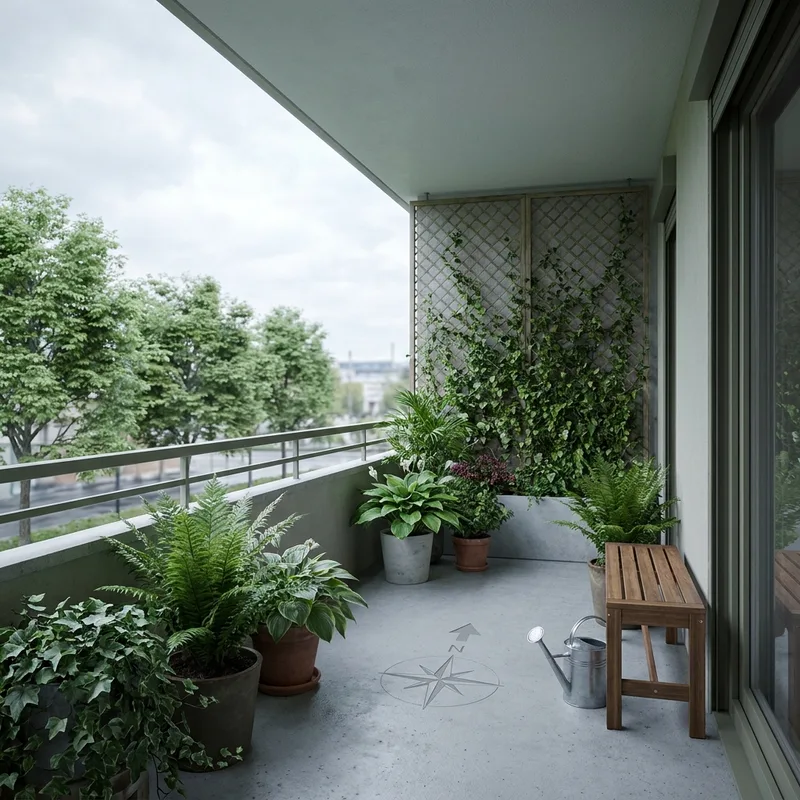
Arranging a north-facing balcony for shade-loving plants means choosing species that thrive in low, indirect light—like hostas, ferns, and impatiens—and accounting for the consistent coolness and dampness that come from minimal sun exposure. I’ve spent fifteen winters watching my own north-facing ledge in Portland, where even in June, the sun barely kisses the railing before slipping away.
You won’t get more than two hours of direct sun here, if any—mostly in the early morning, when it’s thin and cool. This isn’t just “shade”; it’s a microclimate shaped by building walls, neighboring balconies, and the slow, silent retreat of daylight. I’ve killed more begonias trying to force them into full sun than I’ve lost to neglect. The real trick isn’t just picking shade-tolerant plants—it’s understanding how the air moves, how moisture clings, and how the soil stays damp long after rain.
Ferns like Polypodium vulgare unfurl their fronds with quiet confidence here, while Heuchera ‘Palace Purple’ holds its color without burning. But put a Lavandula in the same spot? It will sulk, then go brown.
Drainage matters more here than in a sunny bed. Water doesn’t evaporate quickly, so I use deep pots with extra holes and a layer of perlite beneath the soil—just as I do for overwintering herbs indoors. The soil stays cool, the roots stay quiet, and the plants breathe easier.
And don’t mistake north-facing for lifeless. In late April, when the forsythia outside bursts gold, my balcony is already humming with Helleborus orientalis—dark green, glossy, and blooming in the dim. That’s the quiet magic of this side of the building: not a compromise, but a different kind of abundance.
Choosing the Right Shade-Loving Plants
I’ve spent fifteen autumns watching light slide across my north-facing balcony in Portland, slow and silver, never quite warm enough to dry the moss between the pots. It’s not a garden of sun-lovers—it’s a sanctuary for those who thrive in quiet. Ferns, for one: Polypodium vulgare and Dryopteris erythrosora unfurl their fronds here as if they’ve been waiting for this exact dimness, their scales glistening with dew even in July. I’ve watched Heuchera ‘Palace Purple’ hold its burgundy leaves through frost, its tiny bell-shaped flowers drawing the occasional bee long after the roses have gone quiet. And yes—Impatiens walleriana, those stubborn little blooms that refuse to bow to shade, still return each spring, their petals like spilled watercolor.
I learned early that compatibility isn’t just about light—it’s about rhythm. A Hosta ‘Halcyon’ will sulk if planted next to a thirsty Fatsia japonica, even if both “like shade.” One drinks slowly, the other gulps. I keep them separated now, each in its own deep pot with drainage I’ve drilled myself, layered with composted bark and a handful of perlite—no garden center’s “shade plant mix” ever matched what I’ve cobbled together over years.
The key, I’ve found, is not just choosing plants that survive, but those that speak to the space. When the Helleborus orientalis opens its cups in February, when the Astilbe ‘Sprite’ sends up its plumes in June, when the Sarcococca hookeriana spills its winter perfume into the chill—you know you’ve chosen well.
For more on how light shapes growth, see how much sun a vegetable garden really needs.
Soil and Nutrient Considerations
I’ve learned, after years of wrestling with north-facing balconies, that the soil beneath your pots matters more than the light above them. It’s easy to assume shade means low demand—but shade-loving plants like Helleborus orientalis, Hosta ‘Patriot’, and Fuchsia ‘Mrs. Popple’ still need structure, breath, and balance. Their roots don’t thrive in compacted potting mix that turns to clay by June. I’ve seen them wilt, not from thirst, but from suffocation—soil too dense to drain, too poor to feed.
The pH? It’s not a suggestion. Most vegetables grow best in soil with a pH between 6.0 and 7.0, slightly acidic to neutral CanR MSU, and while your balcony garden isn’t a vegetable patch, the same principle holds: Aspidistra elatior and Polypodium vulgare respond quietly but decisively to that narrow band. I test mine each spring with a simple probe—no lab needed.
And then, the mulch. Not as decoration, but as quiet medicine. A two-to-three-inch layer of organic mulch conserves soil moisture and suppresses weeds without smothering plant roots RHS. I use shredded oak leaves, collected last fall, spread gently over the surface—not piled against stems, never buried. It cools the roots in July, feeds the microbes in October, and by March, it’s vanished into the soil, leaving it looser, darker, alive.
You wouldn’t serve a fine wine in a chipped mug; don’t plant your shade treasures in forgotten bagged dirt. Read mulching garden beds in autumn: how much and which mulch if you’ve ever wondered why your ferns look tired in August.
Designing Your Balcony Layout
I’ve learned that a north-facing balcony doesn’t ask for grand gestures—it asks for patience, and for layers. The first year, I filled every inch with ferns and hostas, only to watch them huddle, pale and leggy, against the brick wall. It wasn’t the light, exactly—it was the air. Still. Silent.
So I lifted the plants. Not just off the floor, but off the idea that everything must sit flat. A vertical trellis of reclaimed oak, bolted to the railing, now holds climbing hydrangea—Hydrangea anomala subsp. petiolaris—whose aerial roots cling like quiet secrets. Below it, I nestle three pots of Astilbe ‘Fanal’, their plumes dark as dried wine.
I stagger the containers: a tall, narrow ceramic urn for a variegated Japanese maple, Acer palmatum ‘Dissectum Atropurpureum’, its leaves trembling in every draft; beside it, a low, wide trough for lungwort, Pulmonaria ‘Sissinghurst White’, its silver-spotted leaves glowing like moonlit paper. The key? Not symmetry, but rhythm—like a poem with enjambment. One pot leans slightly forward; another tilts back, catching the faintest sliver of reflected light from the window above.
I’ve stopped chasing sun. Instead, I chase texture: the waxy sheen of a variegated ivy, the brittle lace of a fern’s frond, the velvet underside of a coleus leaf. And when the rain comes, as it does in October, I watch the water bead and roll—each drop a tiny mirror holding the whole garden, suspended.
You don’t need more space. You need more attention. mulching garden beds in autumn: how much and which mulch taught me that the soil’s breath matters as much as the light. I layer composted leaf mold under every pot. Not for nutrients alone—for stillness. For the quiet.
Watering and Maintenance Tips
Watering a north-facing balcony feels less like a chore and more like a quiet conversation—one you learn by listening. I’ve watched my ferns, my hellebores, my hostas, all lean into the cool dampness of morning mist, and I’ve learned: they don’t crave daily drenching. In spring and fall, I water only when the top inch of soil feels cool and dry—rarely more than twice a week. Summer? That’s when the wind, even in shade, pulls moisture fast. Then, I check the pots daily, lifting them to gauge weight. A lightweight container means thirst.
I water slowly, deeply, letting the soil drink rather than flood—never letting them sit in saucers. Root rot is the silent killer here, and I’ve lost more than one Astilbe to it. Mulch makes all the difference: a two-to-three-inch layer of shredded bark, spread like a blanket over the soil, slows evaporation and keeps the roots cool. I’ve seen it myself—the difference between bare soil baking under a breeze and that same soil, covered, holding moisture for days.
Pests? Slugs, mostly. They emerge at dusk like quiet thieves, leaving lace-like holes in Heuchera leaves. I lay out beer traps—shallow dishes sunk to rim level—and check them at dawn. It’s messy, but effective. Occasionally, aphids cluster on new Fuchsia buds. A strong spray of water, early in the day, dislodges them without chemicals. I’ve never needed insecticidal soap; the shade keeps populations low.
And always—always—remove dead leaves. Not for looks, but because damp, decaying foliage is a nursery for fungus gnats and mildew. I’ve watched entire Begonia clumps decline from one neglected leaf. Patience, here, isn’t passive. It’s vigilance.
Takeaways for a Thriving Balcony Garden
I’ve watched my north-facing balcony come alive over seven winters—not with sun-worshippers, but with the quiet performers: Hosta ‘Patriot’ unfurling silver-edged leaves by April, Heuchera ‘Palace Purple’ holding its deep plum through frost, and Helleborus orientalis nodding like shy monks beneath the eaves. This isn’t just greenery—it’s a daily conversation with shade, where moisture lingers longer, where the air stays cool even in July, and where patience isn’t a virtue, it’s the only currency that matters.
You don’t “fix” a north balcony—you learn its rhythm. Ferns like Polypodium vulgare thrive where others fail, and Impatiens walleriana—yes, those old-fashioned bedders—still bloom reliably if you keep the soil just damp enough. Don’t mimic the south-facing balcony next door. Instead, layer textures: the glossy leathery leaves of Skimmia japonica against the lacy fronds of Adiantum capillus-veneris, the matte green of Astilbe rising above the creeping Vinca minor. I’ve seen too many gardens fail because someone tried to force sun-lovers into the shadows. But when you match the plant to the place—when you choose Lamium maculatum over petunias—you’re not just gardening. You’re listening.
And that’s when the balcony stops being a constraint and becomes your most intimate sanctuary. Try one new shade-lover this spring. Let it surprise you. overwintering herbs indoors taught me that resilience often hides where light is scarce—and so do beauty, stillness, and quiet joy.
Frequently Asked Questions
Which shade-loving plants are best suited to a north-facing balcony?
I’ve grown Hosta ‘Patriot’, Ferns like Dryopteris erythrosora, and Helleborus orientalis here for years—each thriving in the cool, dim glow that never quite turns golden. Impatiens bloom reliably, and Astilbe brings feathery plumes even when the sun forgets to visit. Avoid anything demanding more than three hours of dappled light. The key? Match the plant’s native woodland habit to your balcony’s quiet shade.
How much light does a north-facing balcony typically receive, and how can I tell if it is enough for specific plants?
In my Portland balcony, direct sun lasts barely an hour—sometimes none—between October and March. By June, I get two hours of weak, angled light before the building shadow swallows it. I track it with a simple paper sundial: if a plant’s label says “partial shade,” and it gets less than four hours of filtered brightness, it’s safe. Too much guesswork? Test with a light meter app. Most shade lovers need only 100–500 foot-candles.
What containers, soil, and drainage setup work best for shade plants on a balcony?
I use unglazed terracotta for breathability, paired with a mix of 60% compost, 30% loam, and 10% perlite—no peat. Drainage is non-negotiable: each pot has at least two ½-inch holes, raised on bricks. I never let saucers sit full; root rot kills more than neglect. For moisture retention without sogginess, I top-dress with a 2- to 3-inch layer of shredded bark mulch.
Leave a Reply