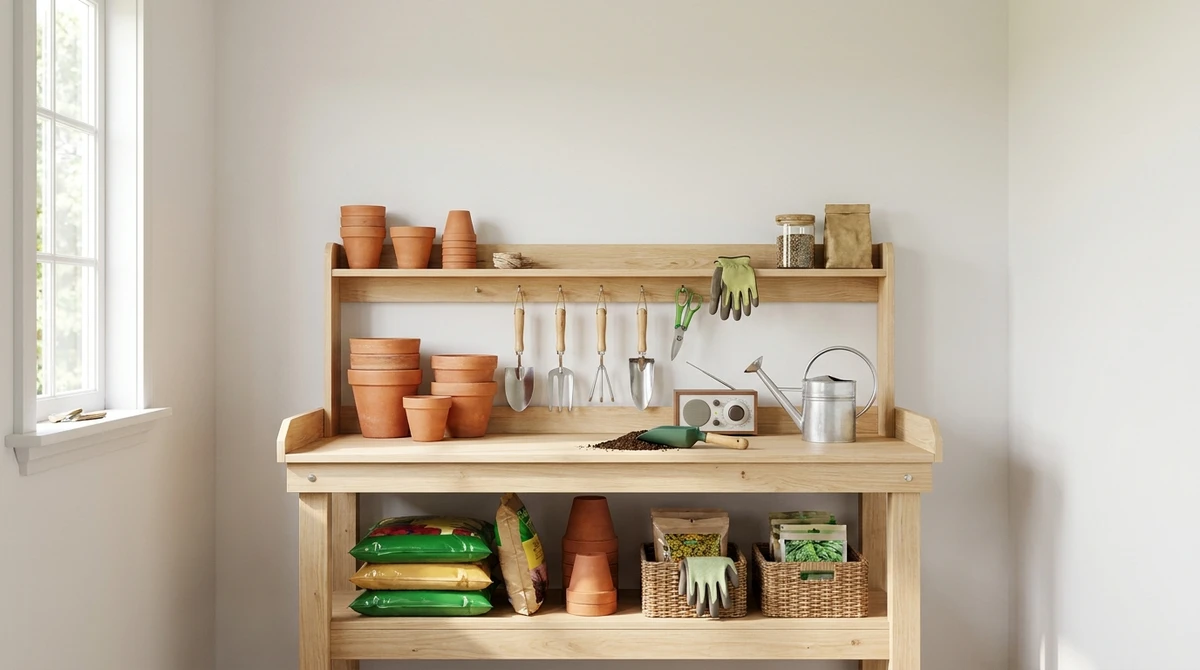
The Importance of an Organized Potting Bench
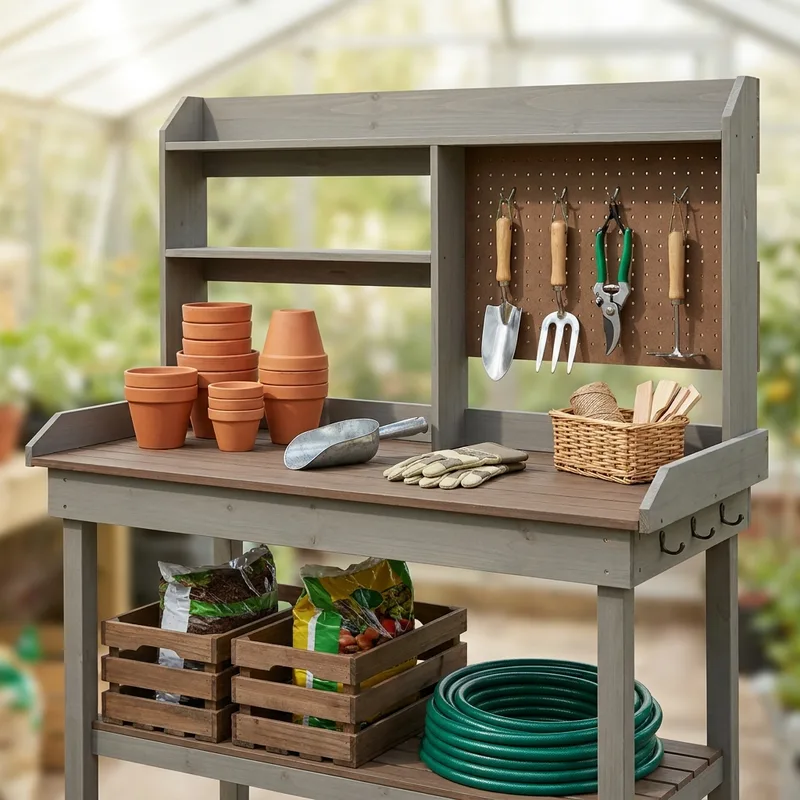
Organising a small potting bench in a shed means placing your most-used tools within arm’s reach, storing soil and pots overhead, and keeping spills easy to clean—not just tidiness, but rhythm. I’ve repotted 300 Heuchera seedlings in one March morning because my bench didn’t fight me.
I learned this the hard way, kneeling in wet sawdust at 6 a.m., hunting for the trowel buried under last autumn’s Helleborus pots. An organized bench isn’t about aesthetics—it’s about reducing motion, preserving focus. When your peat moss is in a labeled bin above the sink, and your pruners hang beside the watering can, you don’t lose ten minutes to frustration. You plant Campanula poscharskyana while the soil is still cool, not after you’ve torn the shed apart.
Accessibility isn’t luxury—it’s the difference between finishing your seedling trays before lunch or abandoning them until June. I keep my Salvia nemorosa cuttings under the bench, shaded and damp, while my potting mix stays in a wheeled bin on the far wall—just far enough to make me walk, but close enough that I don’t skip repotting. You can’t grow blueberries well if you’re too tired to mix the soil right—soil pH for growing blueberries in raised beds matters, but only if you get to the bench at all.
A cluttered bench doesn’t just slow you down—it steals your patience. I’ve watched too many gardeners quit early spring projects because the space demanded more effort than the plants were worth. Organize for the hands, not the eyes. Let every tool have a home. Let every pot have its place. The rest? That’s just dirt.
Assessing Your Shed Space
I’ve measured every shed I’ve ever worked in—not with a tape measure alone, but with my hands, my knees, and the slow turn of my body as I crouch to reach behind a stack of terracotta pots. Your shed isn’t a blank canvas; it’s a living space shaped by decades of rain, rust, and root systems. Start by measuring the floor, yes—but also the height from floor to rafters, the clearance around the door, and the shadow cast by the window at 10 a.m. in March, when the first Helleborus orientalis unfurls. You’ll need room to turn a wheelbarrow, to lift a 20-pound bag of peat moss without bumping your head on a hanging rake.
I once tried to fit a bench under a sloping eave where the rafters dipped too low for a kneeling gardener; by mid-April, my back had memorized every inch of that frustration. The ideal spot? Near the door, yes—but also near a water source, and where the afternoon sun doesn’t bake the potting mix into cement. I keep mine beside the north-facing wall, where the light is soft and even, perfect for dividing Hosta clumps or repotting Heuchera.
Don’t forget the floor: concrete holds moisture; packed earth invites weeds. If you’ve laid down choosing natural fibre rugs for a hallway that gets muddy, consider how that texture interacts with soil tracked in from the garden. The bench doesn’t need to be large—just precise.
Choosing the Right Potting Bench
I’ve spent twenty winters hauling potting soil through snowdrifts to a bench that groaned under the weight of my tools—until I rebuilt one with oak legs, a stainless steel top, and a shelf beneath just wide enough for a trowel and a jar of Thymus vulgaris cuttings. Not every bench needs to be grand; it needs to fit your hands, your motions, your rhythm. A plastic model might resist rot, but it won’t hold up to the gouges of a trowel digging into Heuchera roots come March. Solid cedar, sealed with linseed oil, still breathes—and after a decade, mine smells like damp earth and rosemary.
I prefer a surface at elbow height—roughly 36 inches—so I don’t hunch over my Salvia nemorosa divisions. A lip around the edge keeps soil from sliding off when I’m repotting Sedum spectabile in late August. Below, I hang my pruners on a rail, and tuck my bags of Leucanthemum vulgare compost into a shallow drawer lined with scrap linoleum—easy to rinse.
Ventilation matters. My shed has a single window, but the bench sits just under it, so the air moves. And water? A faucet within arm’s reach changes everything. You don’t want to drag a bucket from the garden hose every time you’re transplanting Allium cepa seedlings.
For those with barely room to turn, a fold-down bench—like the one I built from reclaimed fence planks—tucks neatly beside the door. It’s not pretty, but it’s mine. And after 3 a.m. seed-sowing sessions, that’s all that matters. Preparing vegetable garden soil for spring planting taught me that the right surface makes the work feel lighter.
Organizing Tools and Supplies
I’ve spent twenty years potting up Helleborus orientalis and dividing Paeonia lactiflora on a bench no wider than my outstretched arms, and I’ve learned this: clutter doesn’t just slow you down—it kills the joy. Vertical space isn’t a luxury in a shed; it’s the only thing that keeps you from drowning in trowels and peat pellets. I mounted a slatted shelf above my bench—just enough for seed packets of Nigella damascena and Cosmos bipinnatus, labeled in pencil, fading gently with each season. Below, hooks hold trowels, pruners, and that battered dibber I’ve had since ’07. Everything has its place, and everything finds its hand again.
I group by task: propagation supplies—jiffy pots, misting bottles, heat mats—live in a lidded bin under the bench, just within reach of the sink. Fertilizers and soil amendments? A labeled tin on the wall, next to the pH meter I check before every blueberry transplant. You don’t need fancy systems. Just consistency.
A moment’s pause before you reach for a trowel—that’s the rhythm of good gardening. Let the space remember what you’ve planted, and it’ll remember how to help you grow.
Incorporating Best Practices for Plant Care
I’ve spent twenty years potting tomatoes and pansies at a bench that leans against my shed’s north wall, and I’ve learned this: soil isn’t just dirt you pour into a pot—it’s the first conversation you have with a plant, and pH is its tone. Most vegetables thrive when the earth whispers between 6.0 and 7.0, and I keep a small pH meter on the bench, just beside the perlite and the labeled jars of compost. I test every batch before I fill a tray—not because I’m obsessive, but because blueberries, which I grow in half-barrels, won’t tolerate anything above 5.5.
Sunlight, too, is a silent partner. I’ve watched tomatoes lag on the bench’s shadowed edge, their blossoms dropping like shy confetti—until I moved them to the south-facing window where they catch at least six hours, sometimes eight, of direct light. That’s not theory; it’s the difference between a single harvest and a basketful. I keep my trays angled now—by hand, by instinct—toward the light that slips through the shed’s single window. The bench isn’t just a workspace. It’s a stage. And the plants, they’re always rehearsing.
Maintaining Your Organized Space
I clear my potting bench every third Saturday in March, just after the last frost threatens to sneak back in—same day I prune the Prunus mume and repot the overwintered Salvia farinacea. It’s not ritual; it’s survival. A cluttered bench means misplaced trowels, spilled perlite in the compost bin, and the slow erosion of patience. I’ve watched too many gardeners abandon their sheds because the tools vanished into a jungle of forgotten seed packets and dried-out dibbers.
Returning each trowel, pruner, and pair of gloves to its hook isn’t vanity—it’s efficiency. The copper-handled pruner belongs on the left wall bracket, not draped over the potting soil sack. The Datura inoxia seeds? They live in the labeled tin beside the perlite, not tucked under the watering can where they’ll sprout in May and confuse everything.
I don’t wait for chaos to demand order. A five-minute sweep after each session—wipe the surface, return the dibber, tuck the twine—keeps the space alive, not just tidy. It’s like tending a Helleborus orientalis patch: neglect it for weeks, and you’re drowning in weeds.
The rhythm matters. I’ve found that maintenance feels less like chore and more like conversation when you do it alongside the first daffodils. Preparing vegetable garden soil for spring planting isn’t just about nutrients—it’s about readiness. Your bench is no different.
Takeaways for a Successful Potting Bench
I’ve spent twenty years potting up primulas in February drizzle, repotting succulents under July sun, and cursing tangled twine that always seems to find its way into my gloves—until I finally built a bench that worked with me, not against me. An organized potting bench isn’t luxury; it’s the quiet discipline that lets you notice the first crocus pushing through mulch, or catch aphids on your Helleborus orientalis before they multiply.
You don’t need a shed the size of a garage—just a clear surface, tools within reach, and a place for the potting mix that doesn’t end up in your boots. I keep my trowels hanging beside the perlite bin, my pruners clipped to the rail where I can grab them without turning around. Water flows from a spigot mounted just above the bench, so I don’t have to lug a bucket from the other end of the shed. And yes, I still spill soil—always will—but now I sweep it into a tray beneath the bench, where it goes straight into the compost pile.
Start small: clear one shelf. Label the jars. Hang that worn-out kneeler where you can’t ignore it. You don’t need perfection—you need to begin. Preparing vegetable garden soil for spring planting waits for no one, and neither should your bench.
Frequently Asked Questions
What is the best layout for a small potting bench in a shed?
I’ve tucked mine beside the north wall, where winter light spills low and even—perfect for inspecting seedlings without glare. Keep the work surface waist-high, with tools within arm’s reach and a drain nearby. A narrow aisle behind lets me turn without knocking over trays of Lavandula angustifolia. The bench faces the door—so I can step out for fresh air mid-potting, then return without disruption.
What tools, supplies, and storage should be kept on or near a potting bench?
My bench holds a trowel, pruners, a dibber, and a small bucket of potting mix—always within reach. Below, labeled jars store seeds: Nigella damascena, Calendula officinalis, Matricaria chamomilla. A hanging caddy holds gloves and ties. I keep a spray bottle of diluted neem oil nearby—essential for early aphid season—and never forget a damp cloth for sticky fingers.
How can you maximize vertical and under-bench storage in a compact shed?
I mounted pegboard above the bench for hanging trowels and scissors—each tool outlined in chalk so nothing gets lost. Underneath, stackable plastic bins hold spare pots and soil bags; one holds my fall garden cleanup checklist supplies. A shallow shelf beneath the bench holds my watering can, and a magnetic strip holds metal tools. Every inch counts when you’re working in a 6×8-foot space.
What materials and bench features work best for a durable, easy-to-clean potting area?
I chose a solid oak top sealed with marine varnish—it resists rot from damp compost and spilled mix. The legs are powder-coated steel, rust-proof even in our damp winters. A slight lip around the edge keeps soil from sliding off, and a removable rubber mat lines the surface for easy hosing down. No plastic laminates—they crack after one season of sun and frost.
How should lighting, ventilation, water access, and cleanup be handled in a shed potting setup?
I added a 5000K LED strip along the ceiling—bright enough to spot root rot in overwintering herbs indoors, without the heat of incandescents. A small window opens for cross-ventilation; a portable fan helps in July. A sink isn’t feasible, so I keep a 5-gallon bucket with a spigot nearby and a squeegee for spills. The floor? Concrete sealed with epoxy—wipes clean after repotting Calamintha nepeta.
Leave a Reply