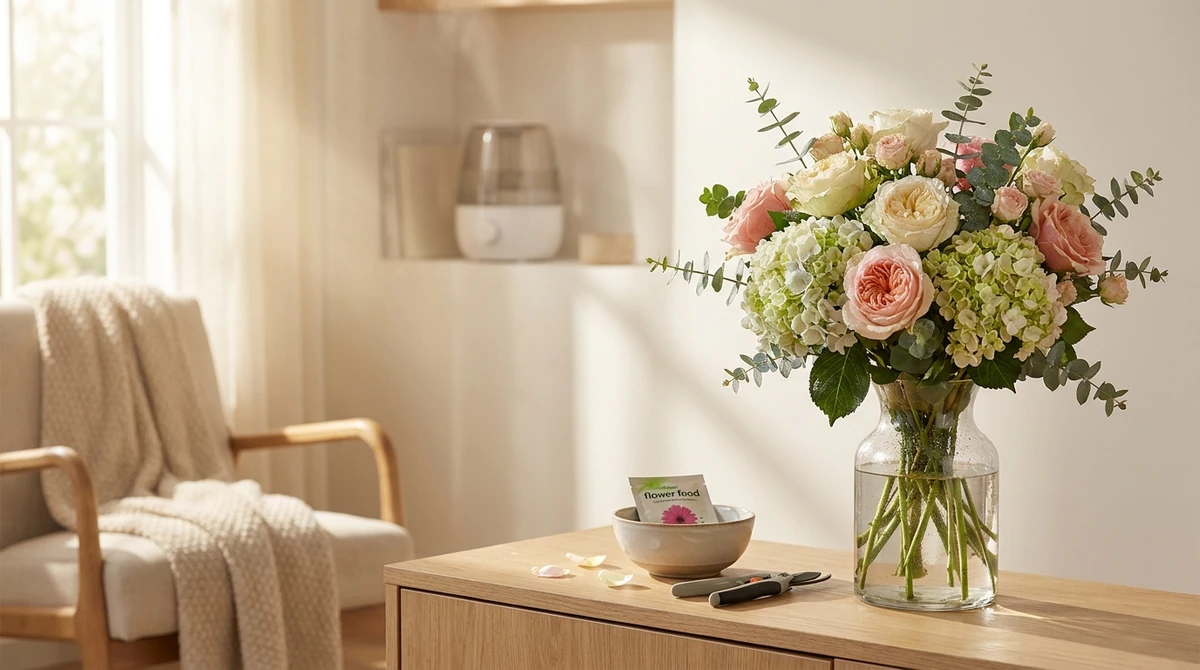
Understanding the Challenges of Warm Environments

Keeping cut flowers fresh for longer in a warm room means fighting heat and low humidity at once: use cool, freshly changed water, trim stems daily, keep arrangements out of direct sun and drafts, and strip all foliage below the waterline to slow bacterial growth.
Heat is the quiet thief in any cut-flower arrangement. I notice it most in late July, when the south-facing window in my writing room pushes the temperature well past 75°F by mid-afternoon and a vase of ‘Mystic Blue’ delphiniums that should last a week starts curling by day three. Warm water accelerates bacterial growth in the vase, clogs the stems, and shortens the bloom life I count on.
Warm rooms also tend to be dry rooms, especially with air conditioning cycling on and off. Low humidity pulls moisture out of petals faster than the stems can draw it up. I’ve watched thin-petaled flowers like cosmos and poppies go translucent at the edges in under a day when the air drops below 40 percent humidity, while thicker flowers like zinnias soldier on a bit longer. Grouping vases together or setting a shallow dish of water nearby helps create a small, more humid microclimate around the blooms.
Most of the standard advice I read online treats heat as a footnote. It isn’t. The strategy shifts when the room itself works against you, and that is the gap I want to address here. The specific moves that matter when it is genuinely warm indoors, not just a vague suggestion to “keep flowers cool.”
Choosing the Right Flowers for Warm Rooms
To keep cut flowers fresh for longer in a warm room, choose heat-tolerant varieties like zinnias, marigolds, and lilies, change the water daily, trim stems at an angle, and keep the vase away from direct sun and heat sources. Warmth speeds transpiration and bacterial growth, so selection and placement matter most.
I learned this the hard way one July, when a bouquet of sweet peas collapsed overnight in my south-facing kitchen. The room sat at 80 degrees, and those delicate stems simply couldn’t drink fast enough to keep up.
Some flowers take heat in stride. Zinnias, marigolds, cosmos, and sunflowers all evolved in hot climates and hold their petals when the air turns warm. Lilies and gladiolus tolerate stuffy rooms better than most. I’ve had zinnias last a full week on a warm windowsill when sweet peas barely made it to morning.
Season matters too. Summer-grown stems are tougher than winter greenhouse flowers, which are bred for cool transport and soft conditions. If you’re buying in July, ask for field-grown stock. For soil preparation that gives you stronger, heat-resilient plants, I always check my preparing vegetable garden soil for spring planting notes before the season starts.
Avoid the soft-hearted ones. Tulips, ranunculus, and anemones collapse quickly in warm rooms. Peonies will open too fast and drop their petals within days. Stick with the thick-stemmed, waxy-petaled options when the room runs warm.
Water Quality and Temperature Management
To keep cut flowers fresh longer in a warm room, use cool, clean water changed every two days, trim stems at an angle with each change, and keep the vase away from direct sun and heat sources. Warm rooms accelerate bacterial growth and transpiration, so managing water temperature and freshness is the single most important factor for vase life.
I learned this the hard way one July, when a bunch of dahlias collapsed in a south-facing study within three days. The water had turned tepid and cloudy, stems slimy to the touch.
Warm water isn’t always the enemy, though. A brief soak in hot water actually helps woody stems like roses and hydrangeas drink again after transport. For everyday vase life, though, I fill the jug from the cold tap and let it sit briefly until it reaches room temperature. Ice-cold water can shock delicate stems; lukewarm water invites bacteria to multiply faster. The goal is a steady, moderate temperature that matches the room without adding heat.
Changing the water regularly matters as much as temperature. In a warm room, bacteria multiply quickly, clouding the water and clogging the stems’ uptake channels. Every two days I empty the vase entirely, rinse it, refill with fresh water, and re-trim each stem by a centimetre. The difference is visible within hours. The stems drink more freely, the petals perk up, and that faint swampy smell never gets a chance to develop.
If you’re also managing overwintering herbs indoors, the same principle applies: steady, moderate temperatures and clean water outperform any single additive.
Utilizing Flower Food Effectively
To keep cut flowers fresh for longer in a warm room, use a purchased floral preservative mixed at full strength in lukewarm water, recut stems at an angle, strip all foliage below the waterline, and replace the solution every two days. Warmth speeds bacterial growth and transpiration, so the preservative’s acidifier and biocide matter more here than at cooler room temperatures.
I keep those little foil sachets that come tucked with grocery-store bouquets, and I use them. According to the Chicago Botanic Garden and other sources, a purchased floral preservative remains the best solution for extending flower freshness (piedmontmastergardeners.org). The reason is simple chemistry: that powder combines sugar to feed the bloom, an acidifier to help stems draw water up, and a biocide to suppress the bacteria that warm rooms encourage.
Warmth accelerates both transpiration and bacterial growth, so that biocide component earns its keep. I notice my dahlias in a July kitchen drink noticeably faster and cloud the water sooner than the same cultivars in a cool hallway.
Mix the powder at the ratio printed on the packet, usually one sachet to roughly a pint of lukewarm water. Stir until it dissolves fully before the stems go in. I use a measuring jug for this step because eyeballing it in a narrow vase rarely hits the mark.
Change the solution completely every two days. Dump the old water, rinse the vase, recut each stem by an inch, and mix a fresh batch. Topping off with plain water dilutes the preservative below the effective dose, leaving the flowers underfed in the heat.
For gardeners who also overwinter herbs indoors, the principle is the same: clean water and consistent feeding keep tender stems performing when the room runs warm.
Optimal Vase Selection and Arrangement Techniques
I learned the vase lesson the hard way one July, when a tight cluster of sweet peas turned to mush inside forty-eight hours in a narrow ceramic jug. The neck was too tight. Stems pressed together, water warmed fast, and bacteria bloomed.
A wide-necked glass vase is my default now for warm rooms. Glass is easy to scrub clean between uses, which matters more than people think. Ceramic and metal look handsome, but if they hold residue from a previous arrangement, that residue feeds the next bloom’s decline.
Size matters too. A vase that crowds stems at the waterline traps heat and blocks the slight air movement that helps keep the water cooler than the surrounding room. I give each stem roughly its own width of space.
When I arrange, I strip every leaf that would sit below the waterline. Then I space the stems so each flower gets air around its head, not just its base. Think of it the way I think about mulching garden beds in autumn: a protective layer works only when it doesn’t smother what it’s meant to protect. Packed stems in a warm room do exactly that.
A loose, open arrangement lasts days longer than a tight mound. The flowers breathe, the water stays cleaner, and you lose fewer stems to the soft rot that heat accelerates.
Maintenance Tips for Longevity
I check my dahlias every morning in July, when the kitchen hits eighty by noon. The first thing I do is pull any stem that’s gone soft at the neck. Bacteria colonize that breakdown point and spread into the water faster than you’d think.
Every two days I retrim each stem at a sharp angle, taking off about an inch. A fresh cut reopens the xylem vessels that warm water clogs with microbial slime. I use clean snips, not the kitchen scissors that have been cutting twine all week.
Foliage below the waterline has to go. I strip it ruthlessly, even on roses where the leaves are part of the look. Submerged leaves rot, and rot feeds the bacteria that shorten vase life. One yellowing leaf left too long can take down a whole arrangement by Tuesday.
I keep the vase away from the radiator and the fruit bowl. Ripening fruit gives off ethylene, and in a warm room that gas ages flowers overnight. A bowl of bananas three feet from your peonies is sabotage you can’t see.
For more on protecting plants from temperature stress, see my notes on overwintering herbs indoors.
Conclusion and Key Takeaways
A warm room will always work against cut flowers, but the strategies I’ve gathered here tilt the balance back in your favor. Cool, clean water changed daily. Stems trimmed at a sharp angle each time. Flower food measured, not dumped. Vases scrubbed between uses. Keep the arrangement away from radiator drafts and afternoon sun.
None of this is fussy. It’s the same rhythm I follow in the garden, where a 2 to 3 inch layer of organic mulch conserves soil moisture and suppresses weeds without smothering plant roots, as the RHS advises. Inside or out, the principle holds: manage the environment, and the plant responds.
I encourage you to experiment. Try a zinnia next to a cosmos and watch which wilts first in your kitchen. Move a vase three feet from the window and note the difference a day makes. Every room has its own microclimate, and the best way to learn yours is to observe closely.
If you want to extend the season further, overwintering herbs indoors applies similar logic: steady temperatures, clean water, and attention to drafts. The same care that keeps a basil plant alive in January keeps a peony alive in July.
Frequently Asked Questions
How can I make cut flowers last longer specifically in a warm room or hot climate?
In a warm room, cut flowers transpire faster than they can drink, so the goal is slowing that water loss. I move vases to the coolest spot available, refresh water daily, and strip all foliage below the waterline. A nighttime drop in temperature, even a few degrees near an open window, helps them recover overnight.
What water temperature, additives (e.g., flower food, sugar, bleach), and container practices help keep cut flowers fresh in warm conditions?
I use cool tap water, around 40 to 50 degrees Fahrenheit, which slows bacterial growth without shocking the stems. Commercial flower food works better than home mixes in my experience. A drop of bleach keeps water clear, and a clean, wide vase allows better airflow around each stem.
How often should I change the water, trim the stems, and remove wilted petals or leaves to prevent bacteria growth in a warm room?
In warm conditions, I change the water every two days at minimum, sometimes daily in midsummer. Each change, I retrim stems an inch at a sharp angle and strip any submerged leaves. Wilted petals go immediately, since decaying tissue feeds bacteria that clog stems and cut vase life short.
Which flower types are most/least tolerant of heat, and do care techniques differ by species in warm environments?
Zinnias, sunflowers, and lilies handle heat well in my beds. Delphiniums, sweet peas, and ranunculus collapse quickly indoors when temperatures climb. Heat-tolerant varieties still need fresh water and clean stems, but delicate types benefit from a cool resting spot overnight, even a brief stint near an open window or in a cooler hallway.
What environmental adjustments (light, drafts, humidity, air conditioning, placement away from appliances or sunlight) matter most for flower longevity in a warm room?
Keep vases away from direct sun, heating vents, and appliance exhaust. My kitchen counter near the refrigerator is a trap; that steady warmth ages flowers fast. Air conditioning helps, but avoid placing arrangements directly in the cold draft. Steady, moderate temperatures with indirect light and ambient humidity give the best results. For more on managing indoor microclimates, see arranging a north-facing balcony for shade-loving plants.
Leave a Reply