Understanding Natural Fiber Rugs
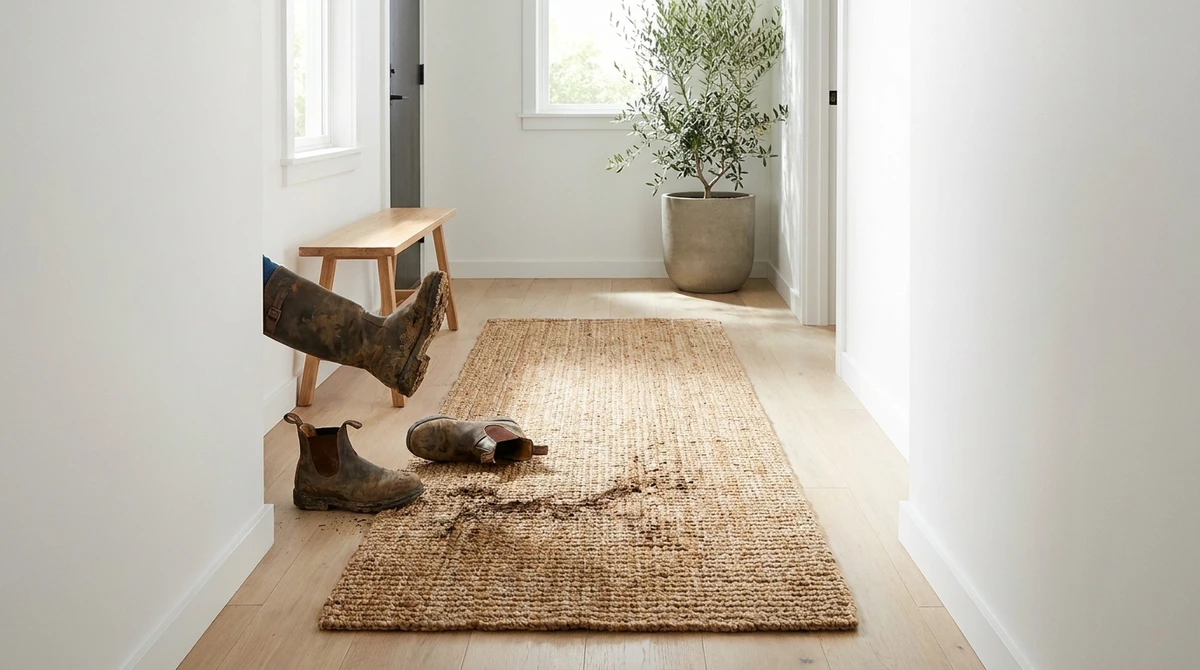
Choosing natural fibre rugs for a hallway that gets muddy means picking durable, coarse weaves like sisal or seagrass that scrape dirt off boots, resist staining better than soft cotton, and can be shaken out or vacuumed after wet foot traffic. Jute is softer but less forgiving with mud.
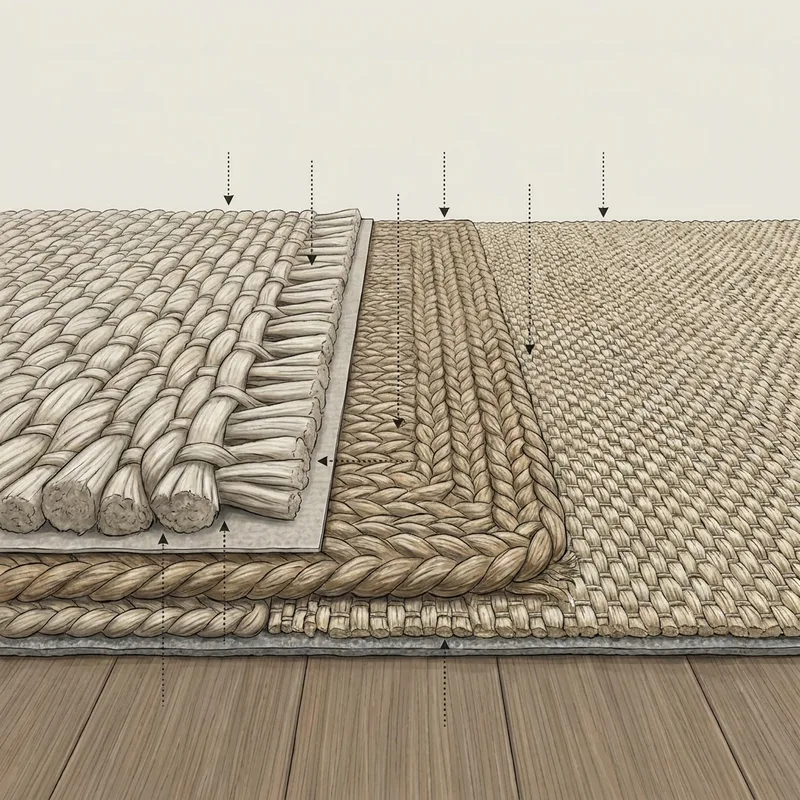
Natural fiber rugs are woven from plant materials, agave, coconut husks, reed grasses, hemp, rather than petroleum-derived synthetics. The fibers I see most often in hallway runners are sisal, drawn from the agave leaf, and seagrass, a reed that grows in flooded fields. Both take dye grudgingly, which is why they tend toward undyed, sandy tones that hide soil the way a gravel path disguises footprints. Jute, softer and glossier, comes from the stalk of a Corchorus plant and makes a kinder surface under bare feet, though in my own back hall it showed every boot print after a wet October.
What these fibers share is a certain honest roughness. They do not pretend to be plush. They scrape. They trap grit in their weave rather than smearing it across hardwood. A sustainable natural-material decor for a small living room approach carries the same logic indoors: choose the material for what it actually does, not for how it photographs. Coir, spun from coconut husk, is the coarsest of the lot. Bristly underfoot, excellent at the threshold where clay meets floor.
I think of these weaves the way I think of mulching garden beds in autumn: how much and which mulch, a layer chosen for the job it has to do. The wrong mulch smothers roots; the wrong rug holds mud against the grain and rots. The right one lets the dirt fall through.
Why Choose Natural Fiber Rugs for Hallways?
Choosing natural fibre rugs for a hallway that gets muddy comes down to three fibres: coir, sisal, and seagrass, each handling wet boots and grit differently. Coir scrapes mud best, seagrass shrugs off damp, and wool-blend sisal adds warmth. Pick by backing and weave tightness.
I learned this the hard way. My back hall sits between the vegetable beds and the kitchen, and for years I tried synthetic runners there. They trapped moisture against the oak boards underneath, and by November the floor beneath smelled like a damp cellar. A coir mat changed that. The stiff bristles scrape clay off my boots before I reach the kitchen, and the open weave lets air circulate underneath.
Natural fibres do something synthetics resist: they breathe. Sisal and seagrass wick moisture rather than trapping it, which matters when you come in from mulching the beds in March with muddy knees. The aesthetic appeals to me too. The pale gold of a seagrass runner carries the same warmth as a basket of dried hydrangea heads on the hall table, and it hides soil better than cream wool. Durability is real. My current seagrass runner has lasted four winters of daily boot traffic, where a cotton flatweave frayed within a single season. My notes on sustainable natural-material decor for a small living room cover similar ground for tighter spaces.
The trade-off is that none of these fibres love prolonged wet. Coir handles a muddy footprint; a soaked boot left standing on it will stain.
Assessing Muddy Conditions: What to Consider
Choosing natural fibre rugs for a hallway that gets muddy means weighing sisal, seagrass, jute, and wool against the specific kind of dirt your home tracks in, because clay, loam, and leaf-mould each stain differently, and the wrong fibre turns a runner into a permanent mess in weeks.
Assessing Muddy Conditions: What to Consider
Not all mud is the same mud. The reddish clay that clings to my boots after working the south border behaves nothing like the dark, organic loam I track in from the compost pile in March. Clay binds. It grips jute fibres and dries into a stubborn crust that brushing alone rarely lifts. Sandy loam, by contrast, shakes out more willingly, though it grinds between the weave and abrades natural fibres with every footstep. Then there’s leaf-mould, the silty black residue of decomposed oak and maple leaves, which seems innocuous until it smears into a damp smear across a pale sisal runner.
I learned this the hard way three autumns back, when I laid a flat-woven jute runner down the back hall and watched it darken within a fortnight. The clay from my vegetable beds, the same beds I prepare each spring, worked itself so deep into the weave that no amount of beating drew it out. Jute absorbs moisture readily, which is its virtue in a dry entry and its downfall in a muddy one. Damp mud wicks into the fibres, and once it dries, the stain sets.
Sisal fares better against grit but still suffers under repeated wet trampling. Seagrass, with its waxy coating and tighter weave, shrugs off clay better than either, though it sheds fine grit that can scratch hardwood underneath. Wool, the most resilient of the natural fibres, tolerates cleaning and rebounds from compression, but it holds onto organic stains with a tenacity that surprises people who associate it only with cosy living rooms.
The real enemy of any natural fibre rug isn’t a single muddy footprint. It’s accumulation. Grit acts as an abrasive underfoot, slowly sawing through fibres at the points where the weave crosses. Moisture softens plant-based fibres, weakening them at exactly the spots that take the most traffic. A hallway that sees muddy boots twice a day in October will age a natural fibre rug differently than one that sees them twice a week. I rotate my runners seasonally now, pulling the good wool one into the kitchen for winter and letting a rougher seagrass mat take the punishment at the door. I fell into that practice after noticing how quickly even a well-made sisal runner thins at the threshold, where the first step always lands heaviest.
Top Natural Fibers for Muddy Hallways
Top Natural Fibers for Muddy Hallways
Choosing natural fibre rugs for a hallway that gets muddy means picking sisal or wool for durability and mud-shedding, avoiding jute and cotton which absorb moisture and stain. Sisal’s tight weave traps dirt for easy vacuuming; wool resists mud naturally and cleans well.
I learned this the hard way one wet October when I rushed a jute runner straight from the front door to the back hall. Within a fortnight it had darkened into something resembling felted peat. Jute absorbs moisture like a sponge. The very quality that makes it soft underfoot also makes it a poor candidate for muddy boots and wet dog paws. Cotton flatweaves are similarly unforgiving; they hold onto dampness and develop that faint sour smell I associate with green compost left too long in a bin.
Sisal is the fibre I keep returning to. Its stiff, cellulosic weave doesn’t absorb water the way jute does, so mud tends to sit on the surface rather than soaking in. A good vacuum, and the occasional brisk beating over the porch rail, pulls most of the grit out. The rough texture also grips muddy soles, scraping off a fair bit before it travels further indoors. I’ve had a bordered sisal runner in my own back hall for three winters now, and it still looks presentable despite daily traffic from two gardeners and a spaniel who treats every puddle as a personal invitation.
Wool is the other fibre I’d seriously consider for a muddy stretch. It has a natural lanolin coating that helps resist moisture, and it tolerates cleaning better than most plant fibres. You can spot-clean it without the whole rug wicking water into a permanent tide line. Wool costs more, and a thick pile can hold onto grit, but a low-pile wool flatweave handles mud about as well as anything natural I’ve tried.
What I avoid in muddy hallways: jute, cotton, and anything with a latex backing that traps moisture underneath. Save those for drier rooms. For the hallway that actually sees mud, sisal and low-pile wool are the honest answers. Sustainable natural-material decor for a small living room can wait until you’re past the door mat.
Maintenance Tips for Natural Fiber Rugs in Muddy Areas
Maintenance Tips for Natural Fiber Rugs in Muddy Areas
I’ll be honest with you: maintaining a natural fiber rug in a muddy hallway is a bit like mulching garden beds in autumn. Timing and technique matter more than brute effort. After years of jute and sisal runners in my own back hall, I’ve learned that mud doesn’t have to mean ruin, but you do need a routine.
Regular cleaning is your first line of defense. I vacuum my hallway sisal every two to three days during the wet months, more if the dog has been through. Use a suction-only vacuum; beater bars will shred the fibers over time. Shake the rug out monthly if you can manage it. I take mine over the porch rail on a dry, breezy afternoon.
For stain removal, act fast. Let wet mud dry completely, then brush it out with a stiff, dry brush, natural bristle, not nylon. Most of it will crumble away. For the residue that remains, dab with a cloth barely dampened with water and a drop of mild soap. Never soak a natural fiber rug; it will warp and stain. Wool handles moisture far better than jute or sisal, which is worth remembering if your hallway is particularly exposed.
As for protective treatments, a fabric guard spray designed for natural fibers can buy you time against the next muddy footprint. I reapply mine each autumn, the way I’d refresh mulch before winter sets in. It will not make the rug invincible, but it will turn a crisis into a minor inconvenience.
Design Considerations: Style Meets Functionality
I learned this the hard way with a charcoal sisal runner in my own back hallway. Beautiful for exactly one week, then a permanent muddy stencil of boot prints running its full length. Dark, heavily patterned natural fibre rugs hide that evidence far longer than pale, solid weaves. A heathered sisal in oatmeal or a bouclé seagrass with its natural variegation will forgive a surprising amount of tracked-in clay before you notice it.
Pattern is the other ally. A subtle herringbone or a low-contrast geometric weave breaks up muddy smudges visually; the eye skims right over them. Bold, large-scale patterns work too, though I’d avoid anything too graphic, since a strong design fights with the hallway’s own architecture and can look busy in a narrow space.
For complementing hallway decor, let the rug sit quietly beneath whatever is already happening overhead. A coir runner with a simple cotton border picks up the wood tones of most baseboards and doors, blending in rather than competing. If your walls are a deep colour, a lighter jute creates a useful contrast: a warm, sandy tone that reads as intentional rather than as a dirt-magnet. I think of it the way I think about sustainable natural-material decor for a small living room. The texture does the heavy lifting, so the colour can stay restrained.
The practical bit: choose a fibre tight enough that mud sits on the surface rather than grinding into the weave. Seagrass, with its slightly waxy finish, sheds dried mud better than the softer, more absorbent jute, a distinction that matters more than any aesthetic preference when the garden is wet.
Conclusion: Making the Right Choice
I keep coming back to the same comparison. The way a hallway rug works is not so different from how a 2 to 3 inch layer of organic mulch conserves soil moisture and suppresses weeds without smothering plant roots, as the RHS notes. The right thickness of the right material does the job without creating new problems. Too thin and mud wins; too dense and nothing breathes.
After seasons of tracking mud through my own back hall, clay season is the worst, October through April, I’ve landed on a few convictions. Sisal takes the beating better than jute, which softens and holds moisture when you need it to shed. Seagrass shrugs off damp the way a waxy leaf sheds rain. Wool forgives stains that would ruin a lighter weave. Pick the fiber that matches your particular kind of mud: gritty, clay-heavy, or just persistent damp.
A rug pad matters as much as the rug itself. Without one, any natural fiber will slide on hardwood and grind dirt into the finish beneath. And size matters too. Too short and you’re stepping past it; too long and it catches the door.
The honest answer is that no natural fiber is truly mud-proof, but some are mud-tolerant in ways that make the trade-off worthwhile. My notes on sustainable natural-material decor for a small living room walk through similar compromises. Choose with your hallway’s worst day in mind, not its best.
Leave a Reply